Renoru
Infrared cameras check driverless shared cars for dirt and forgotten items after each ride
Safe and Clean Ride-Sharing in Autonomous Vehicles.
- Team
- 7 master students
- Universities
- NTNU · TrollLABSKyoto Institute of Technology
What happened, step by step.
Challenge
Renault asked for a safe, comfortable ride-sharing experience in a fully autonomous car. Without a driver, nobody keeps the car clean or makes riders feel safe among strangers.
What the team learned
With no driver or authority on board, riders feel less responsible for the car, and dirt becomes unavoidable. Shared autonomous cars also take away the personal space people enjoy in their own car.
What they built
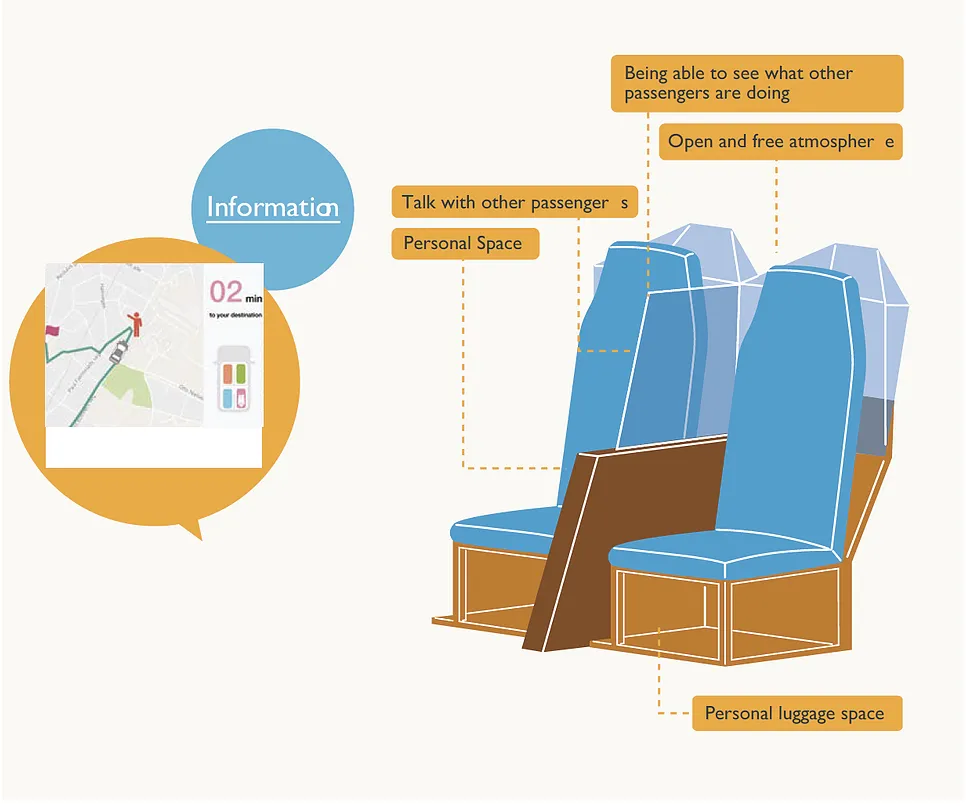
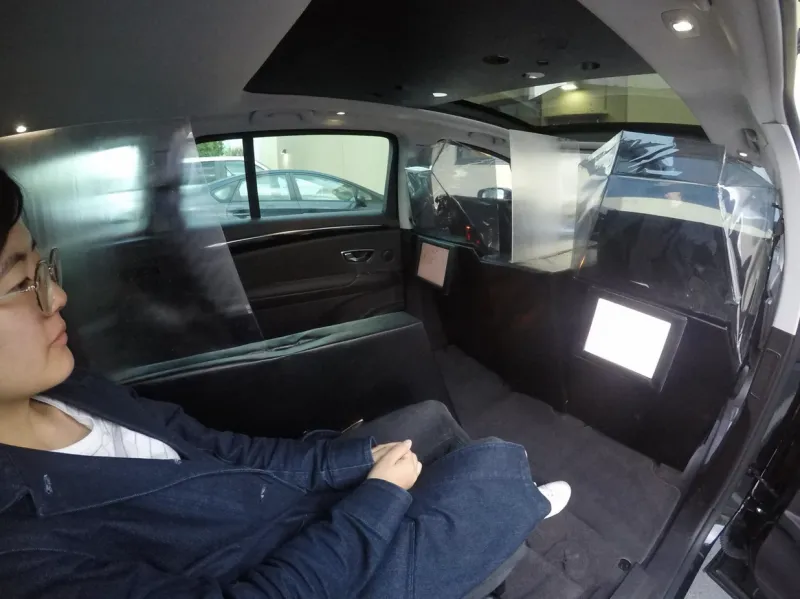
Renoru combines an interior with translucent partitions between seats, screens showing location and arrival time, and a monitoring system. Infrared cameras compare the interior with a clean reference after each passenger, flag dirt or forgotten objects and decide whether the car can keep operating.
How it evolved
- Step 1Earlier, more enclosed seat partitions felt claustrophobic, so the team chose translucent ones with more space.
Full project text
The team’s original texts from the project page.
The Renoru combined interior vehicle design and a monitoring system for the car-sharing user to their best comfort.
Challenge
As one of the well-known automobile manufacturers in the world, Renault has put a great amount of thought into the future of cars. Believing that Autonomous Vehicles contribute to the progress and overall safety of automobiles, Renault challenged the team to create a safe and comfortable ride-sharing experience while also keeping the ride itself completely autonomous.
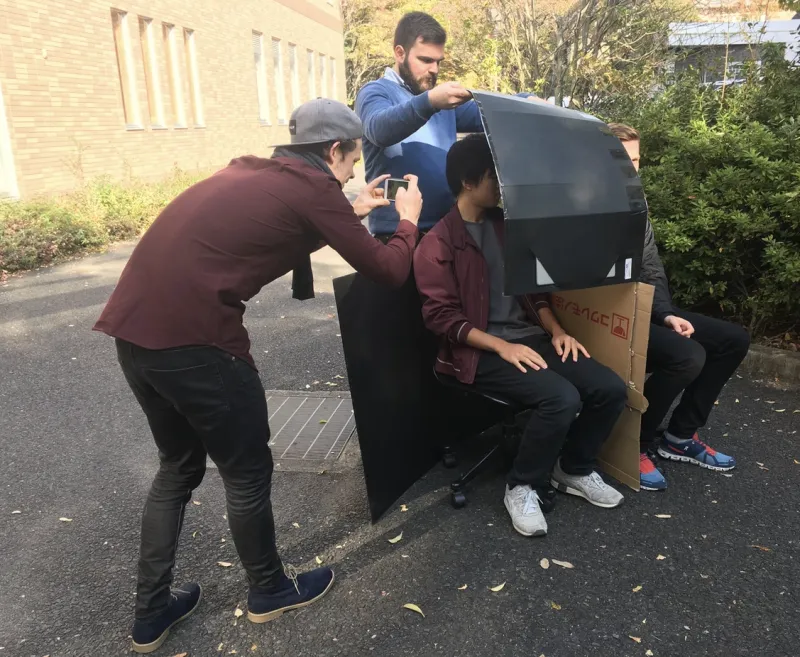
The team found two factors to focus on: psychological safety and cleanliness. Present day ride-sharing involves trusting and being in close contact with strangers; with the addition of a driverless vehicle, it is more important than ever that users feel that the vehicle and the environment they travel in will not feel dangerous, uncomfortable, or as though the user has been stripped of control. With a focus now set, the team set out to begin prototyping.
Solution
The culmination of their iterative prototyping was the Renoru, a combination of interior vehicle design and monitoring system that was created with the user’s utmost comfort in mind. The space inside the Renoru uses translucent partitions between seats to separate the ride-sharing users; this design was chosen over previously more claustrophobic prototypes due to its allowance for ample and comfortable space. The installed screens mounted in front of the users provide details such as their current location and ETA throughout the ride. The infrared picture comparison system can detect any lost or misplaced items throughout the car as pictured below. Whether or not the items remain, the vehicle itself has the ability to decide if the car is suitable for continued operation.
Impact
The Renoru allows advancement in the ride-sharing service without compromising what makes ride-sharing appealing in the present. The user can see the other riders while still being in their own space.
From the field to the prototype.
Who built it.
Erik Aas Borge

Helge Soltvedt
Garsmark Jonas