One academic year

Nine months of human-centred design.

A two-semester project course. Master students from business, design and engineering solve a partner's real challenge with field research, prototypes and user tests.

The year · October to June

One year, four moments

Teams work on their brief all year. Four moments bring partners and the whole network together.
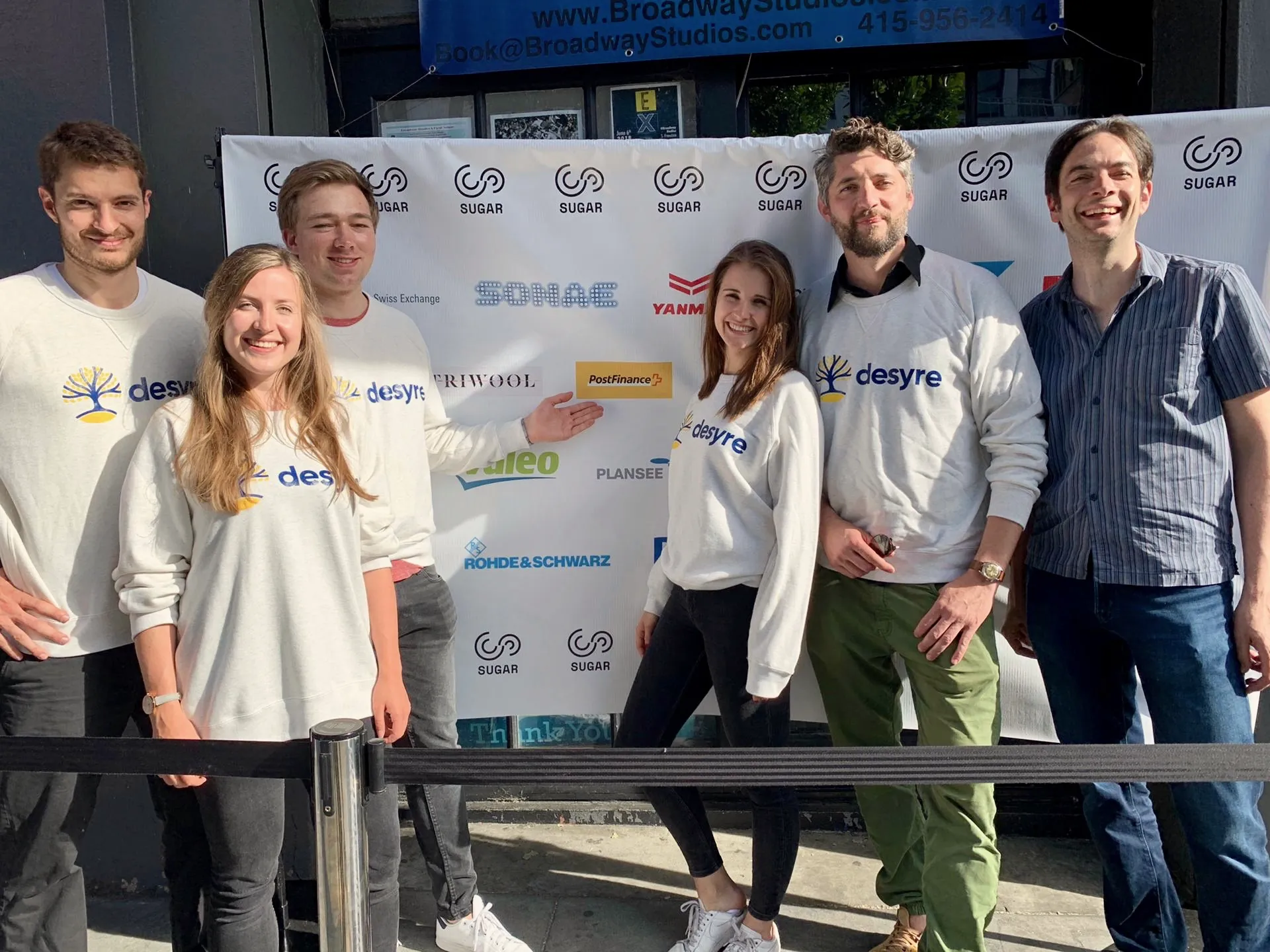
A project team in matching sweatshirts poses in front of the sponsor wall at the SUGAR Expo 2019 in San Francisco
  1. OctGlobal Kick-OffEnd of October: the whole network meets at a partner university to start the year.
  2. DecFall presentationsEach university invites its corporate partners to the teams' first milestone.
  3. MarWinter presentationsThree months on, partners return for their teams' second local milestone.
  4. JunSUGAR ExpoIn June, every team returns for a global showcase of final prototypes and proofs of concept.
  1. 00–05Paper bike · warm-up
  2. 06–09Design space exploration
  3. 10–12Critical function & experience
  4. 13–15Dark horse
  5. 16–18Funky prototype
  6. 19–21Functional prototype
  7. 22–25Part-X · hunting plan
  8. 26Final prototype

Glossary Every week, a large group meeting (LGM) for input and reviews and a small group meeting (SGM) for coaching.

The four moments in detail
  1. Oct Global Kick-Off – To synchronise energies and gain momentum for the students and their corporate partner there is the Global Kick-Off held at one of our partner universities at the beginning of the 9-months journey. This is at the end of October.
  2. Dec Fall presentations – Additional, each university organizes milestone presentations (fall & winter) to provide opportunities for feedback and discussions.
  3. Mar Winter presentations – Every 3 months after the Global Kick-Off locally, the SUGAR universities invite their current corporate partner to join the presentation of their teams.
  4. Jun SUGAR Expo – While in June, which is the end of the SUGAR year, all the project teams come back together for a global showcase of the finalised prototypes or proof of concepts.
All 27 meetings, week by week
  1. 00Interview SessionPaper bike · warm-up
  2. 01Introduction to Design ThinkingPaper bike · warm-up
  3. 02Kick-Off Paper BikePaper bike · warm-up
  4. 03Paperbike LaunchPaper bike · warm-up
  5. 04First Review of PaperbikePaper bike · warm-up
  6. 05Final Paperbike AND Challenge LaunchPaper bike · warm-up
  7. 06Needfinding: Design Space ExplorationDesign space exploration
  8. 07Deep dive Interview + SynthesisDesign space exploration
  9. 08Ideation + Silicon Valley ExperienceDesign space exploration
  10. 09Design Space Exploration Presentation + Personal InputDesign space exploration
  11. 10Critical Function and Critical Experience PrototypingCritical function & experience
  12. 11Rehearsals for Fall PresentationsCritical function & experience
  13. 12Testing Input and Research PlanCritical function & experience
  14. 13Dark Horse Kick OffDark horse
  15. 14Dark Horse Week 1Dark horse
  16. 15Dark Horse Week 2Dark horse
  17. 16Funky Prototype LaunchFunky prototype
  18. 17Funky Week 2Funky prototype
  19. 18Funky Prototype PresentationFunky prototype
  20. 19Functional Prototype Kick OffFunctional prototype
  21. 20Functional Week 2 + Technical Implementation InputFunctional prototype
  22. 21Rehearsal Winter presentationFunctional prototype
  23. 22Part-X Prototype Kick OffPart-X · hunting plan
  24. 23Hunting PlanPart-X · hunting plan
  25. 24Video making and UX / UI designPart-X · hunting plan
  26. 25Shark tankPart-X · hunting plan
  27. 26Final prototype Kick OffFinal prototype

Next dates

Back to top ↑

Roles · three per team

Who does what

Students, coaches and a corporate partner: three roles run every SUGAR team.
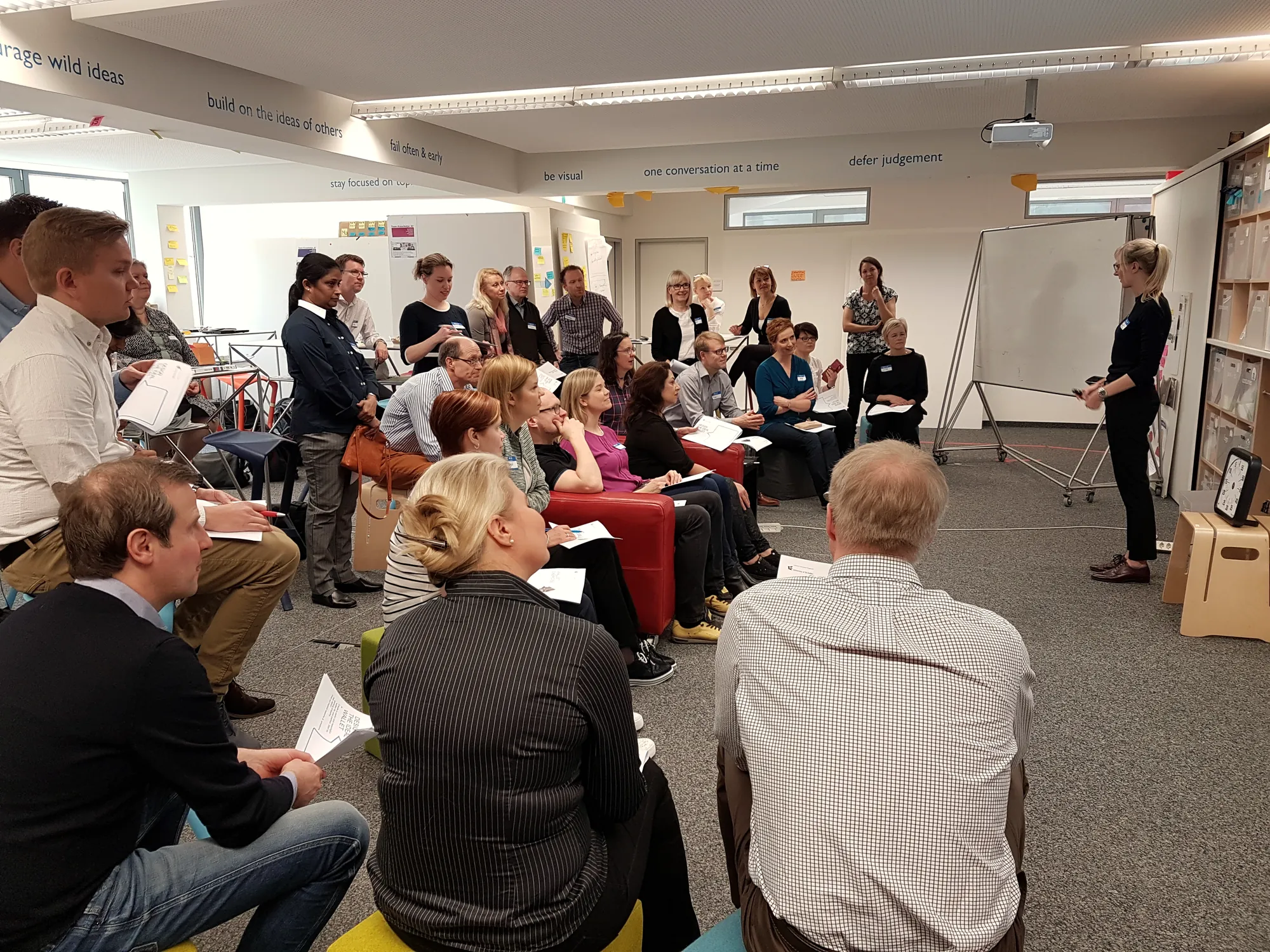
A facilitator briefs a seated group of participants in a workshop space with post-it walls
Students
Students buildTypically six to eight master students per team.Teams from different universities, usually across countries.
Teaching team & coaches
Coaches challengeTwo coaches give every team feedback each week, plus input in the weekly LGM.
Corporate partner
Partners decideThe corporate partner sets the problem statement and meets the team at each milestone.Partner with us →

Back to top ↑

The method · six steps, repeated

The method: six steps, repeated

Teams run the cycle again and again, each time closer to what users actually need.
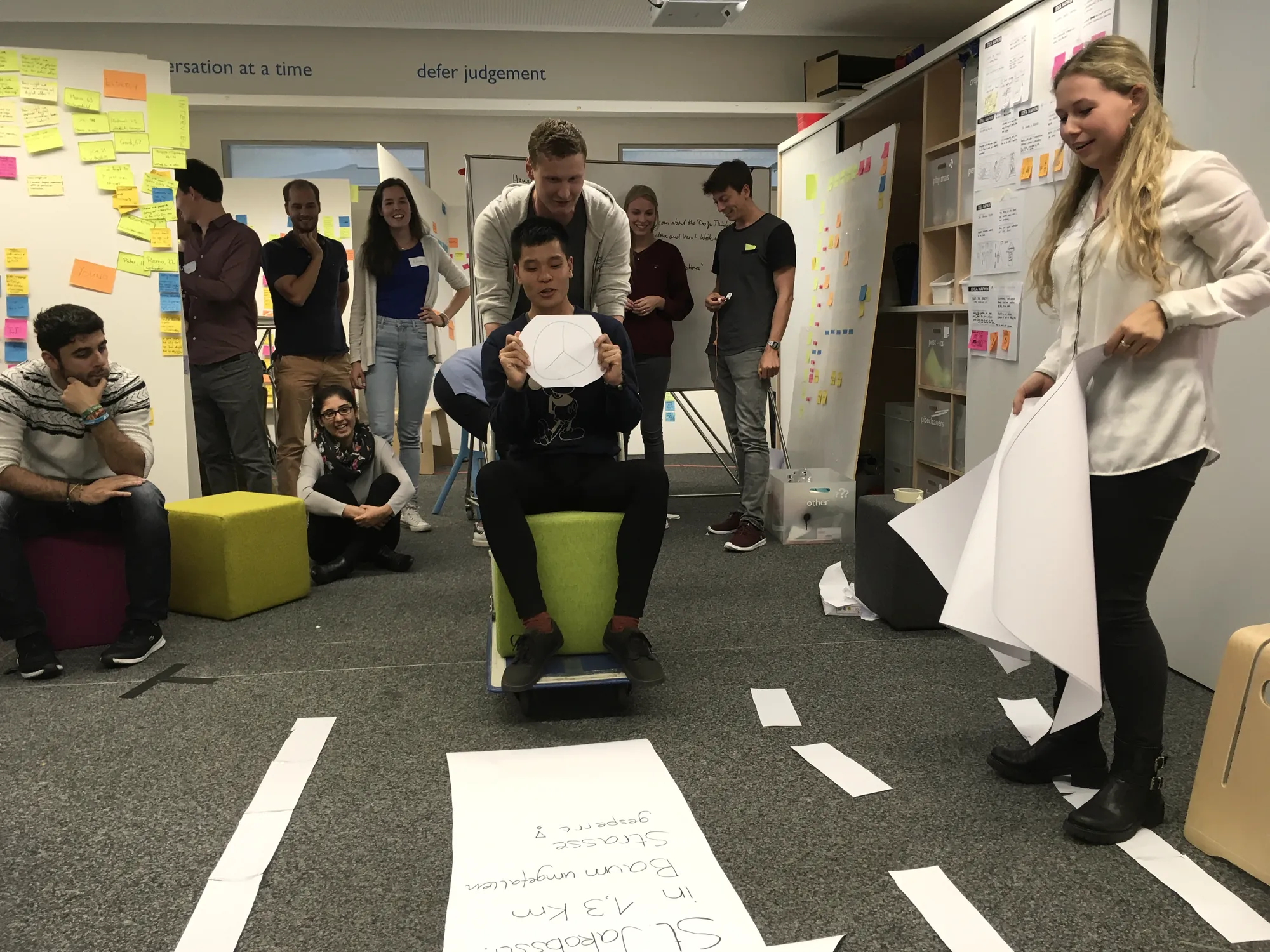
Bodystorming: a student on a chair rides along a road taped to the floor while others watch and play along
  1. 01 (Re)define the challenge
  2. 02 Needfinding
  3. 03 Synthesis
  4. 04 Ideation
  5. 05 Prototyping
  6. 06 Testing ↺
The six steps in detail · Why design thinking?
  1. 01 (Re)define the challenge – Turn a wicked problem into one clear, open question with the partner. Good ideas come from good questions! Design thinking methodology applies for wicked problems, where neither the solution nor the path to get there are clear or visible. By defining a clear challenge we enable students and partners to work on real life problems and tackle their most wicked problems.
  2. 02 Needfinding – Interview and observe users in the field to find direct and indirect needs. In the needfinding phase we focus on early identification of direct and indirect customer needs. Design Thinking applies interviewing, observation and engaging techniques to explore the customer and stakeholder space. Insights and concrete observations from fieldwork are the results and therefore the requirements for a proper ideation phase.
  3. 03 Synthesis – Structure interviews and observations, then use frameworks to spot patterns and insights. The objectives of the synthesis phase are manifold: first, structuring interviews and observation. Second, analyzing the content and results. Third, applying frameworks in order to identify patterns and new insights. This phases’ output are condensed and compressed results and insights. Both give directions for the ideation and brainstorming phase.
  4. 04 Ideation – Go wide: generate many diverse ideas and build on each other's thinking. The ideation phase represents the process of “going wide” which enables to explore a broad solution space. Brainstorming and other creativity methods are used to generate a large quantity of diverse ideas. A strong focus lies on listening and building on each other’s ideas to leverage collective thinking.
  5. 05 Prototyping – Build hands-on prototypes so users can test ideas as early as possible. Prototyping is hands-on and therefore make ideas real and tangible. The goal is to make ideas and concepts as soon as possible testable for customers and other stakeholders. Furthermore, it helps to communicate ideas in the team and the company.
  6. 06 Testing – Test with users and stakeholders again and again, so failures show early. Permanent testing of ideas and prototypes with customers, users and other stakeholders. Testing helps to fail in early project stages and to involve the customer in your own ideation process. This phase is known for its steep learning curve for successful elements and early identification of failures.

Why design thinking?

It puts desirability next to feasibility and viability, so customers and users really want what gets built.

Back to top ↑

For students

One way in: your university

You can't apply to SUGAR directly. You join through the SUGAR course at your member university.
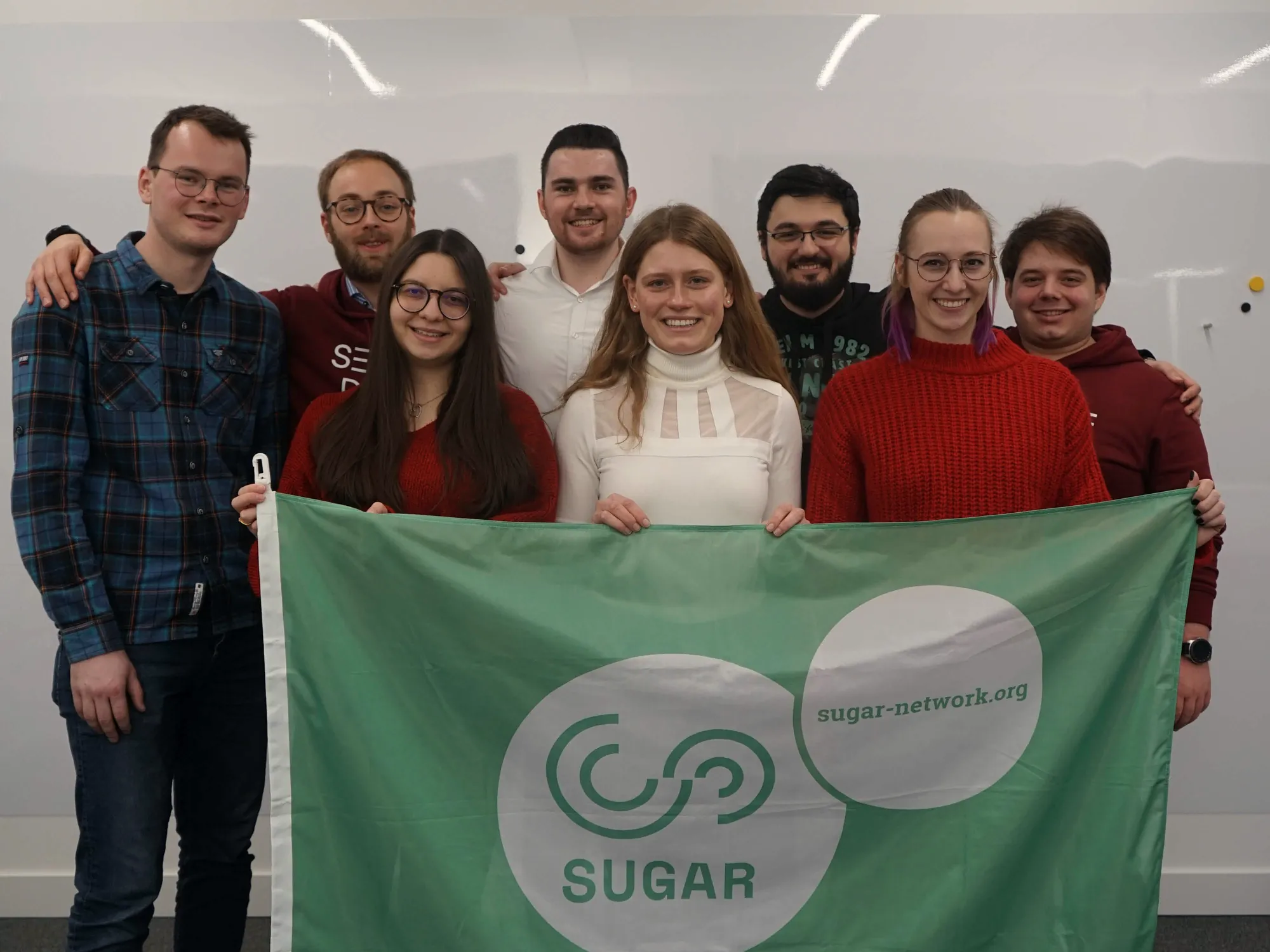
A student team holds up a green SUGAR flag

What they built

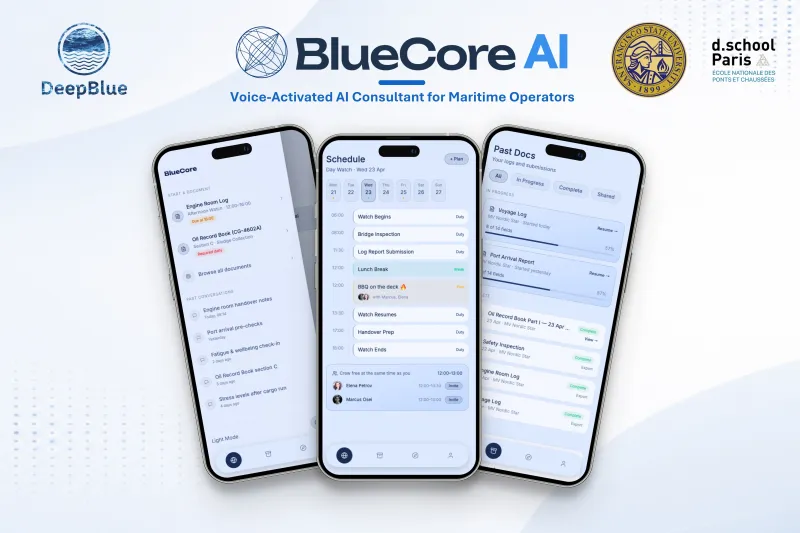
Seafarers speak to an assistant that turns their words into structured operational records
BlueCore AI

with Deep Blue Foundation

Team from San Francisco USParis FR

Digital service2025/26

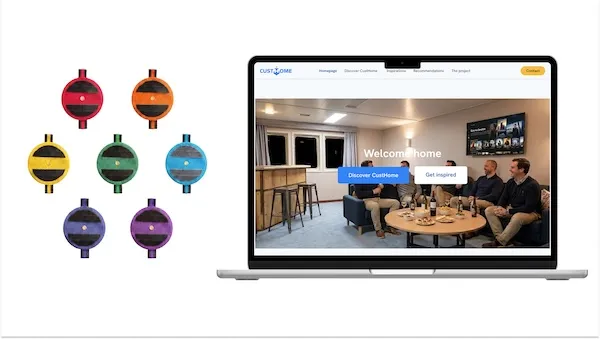
A Velcro-inspired patch lets crews rearrange the ship's recreational room themselves

Custhome

with Deep Blue Foundation

Team from Paris FR

> 5 %Projected officer shortage in the sector by 2026
Physical product2025/26

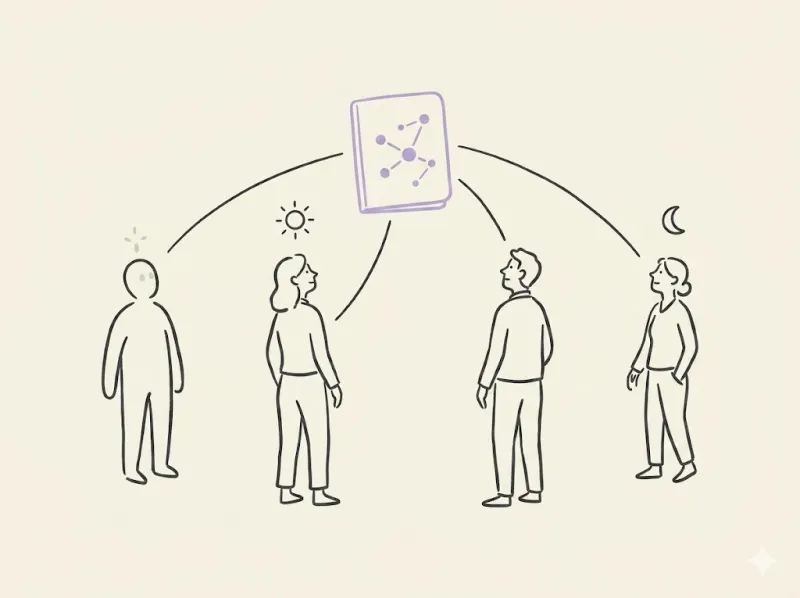
Software records why teams decided something, so AI agents act on that context

EGILA

with SAP

Team from Potsdam DE

Platform2025/26

Back to top ↑

For universities

Teach the course at your university

Experienced members onboard you, with academic and organisational support through the full course.
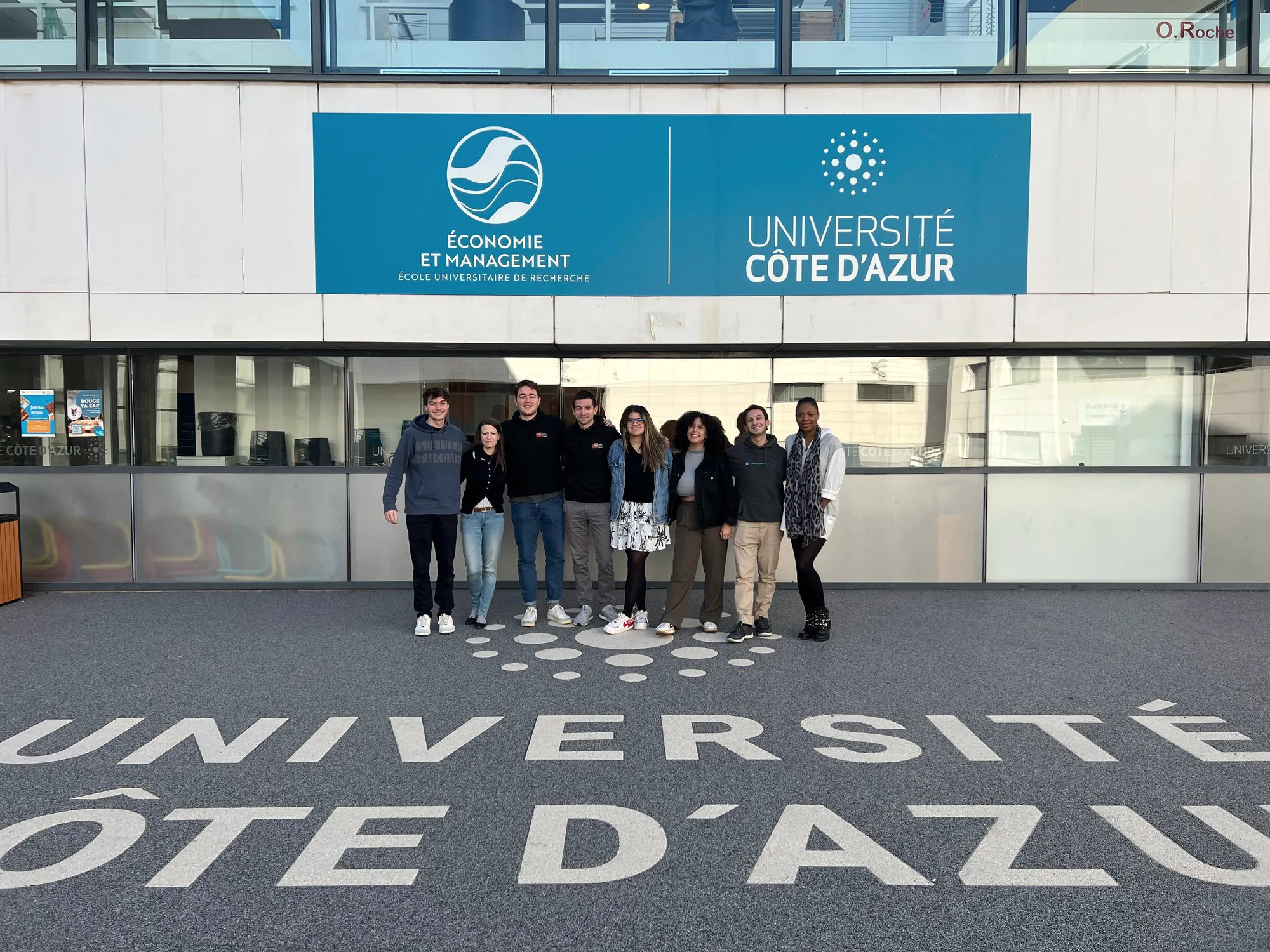
A student team stands in front of a Université Côte d'Azur building

How a course runs and what it takes, in two short videos. Watch the videos

Back to top ↑

Bringing a brief as a company? Partner with us →