Shouhu
A web app tells park operators which wastewater streams to mix to save chemicals
Treating wastewater smartly
- Key fact
- 80 %Factories in Chinese parks with buffer tanks
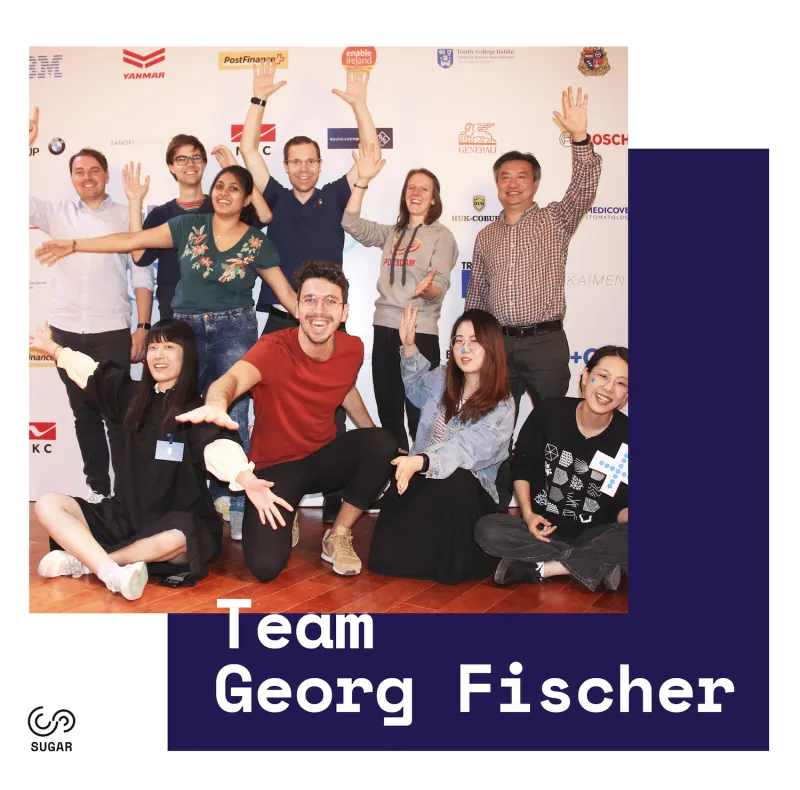
- Team
- 6 master students
- Universities
- Hasso Plattner InstituteTongji University · D&I
- Disciplines
- Advanced Industrial Design · Design Strategy and Management · Digital Health · IT Systems Engineering · Product-Service System Design
What happened, step by step.
Challenge
New rules force Chinese factories and industrial parks to meet stricter discharge standards, yet parks collect all factory wastewater in one pool. Georg Fischer asked how Industry 4.0 could redesign this treatment.
What the team learned
Operators want to keep control and overrule recommendations. Online sensors are expensive and slow, so lab reports stay vital. Buffer tanks, found at about 80 % of factories in Chinese parks, make mixing possible.
What they built
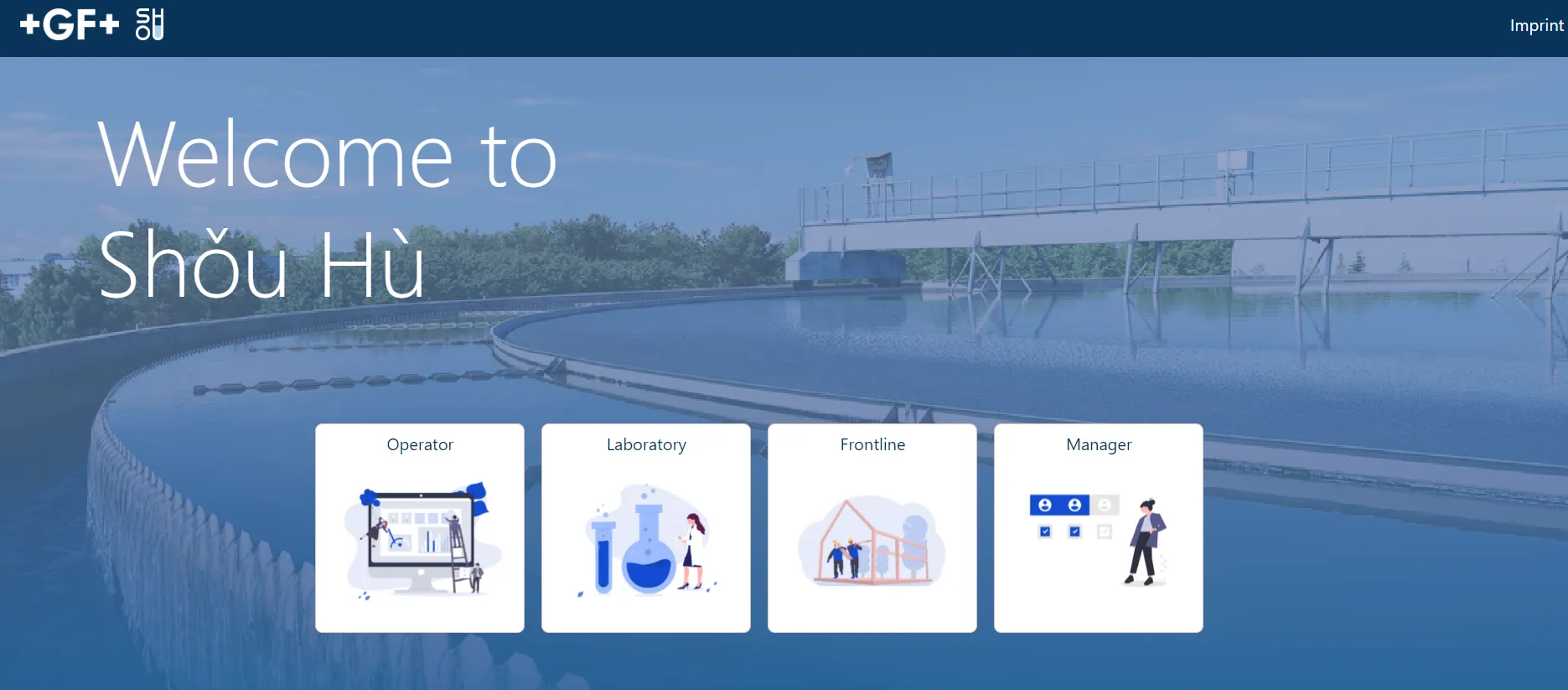
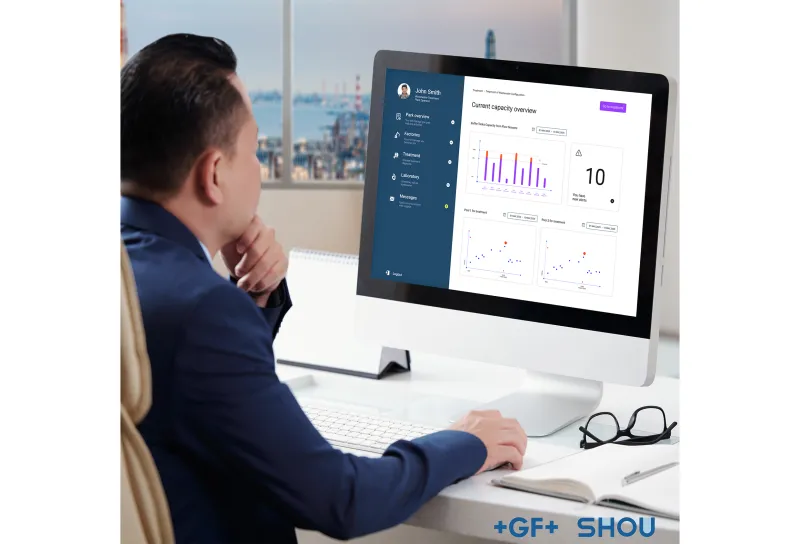
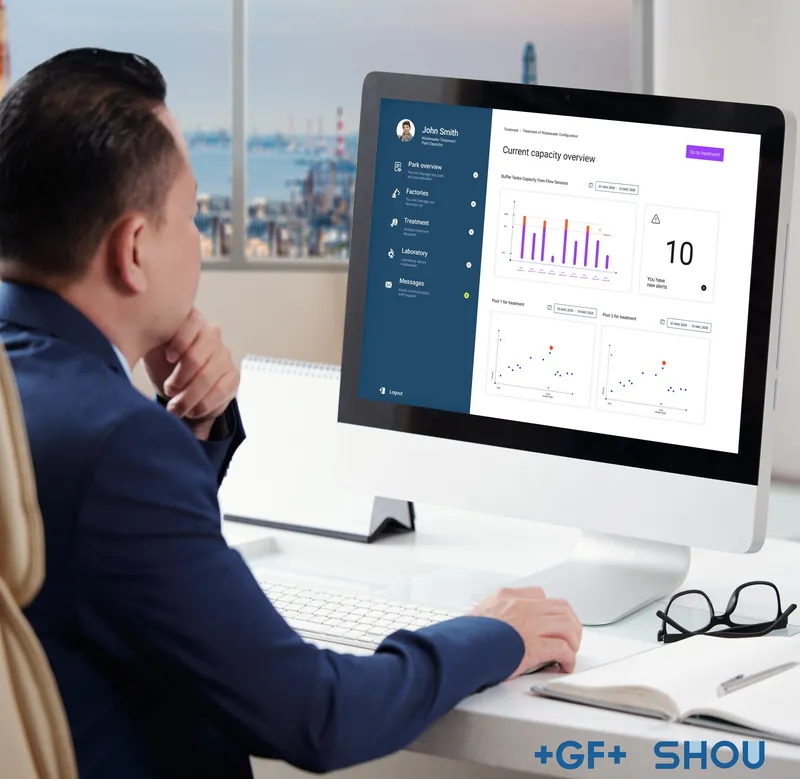
Shouhu is a web-based decision-support system for park operators, lab technicians and frontline workers. It analyses properties such as pH, temperature and chemical oxygen demand and recommends how to mix streams to save chemicals and energy. An optional GF Mini Skid collects data.
How it evolved
- Step 1Ran a co-creation workshop on 12 ideas with four GF Shanghai staff; they favoured sorting wastewater like waste.
- Step 2Modelled an industrial park in clay, which led to coordinating discharge across factories via the cloud.
- Step 3Built a lo-fi prototype with three roles, then a minimum viable web app with a pH-based mixing algorithm.
Results
- Operators, engineers, contractors and GF's China sales manager gave mostly encouraging feedback.
- A German park already saved about 0.5 % of operating costs by mixing streams with a spreadsheet.
- Projecteda park treating 26,000 m³ a day could save up to about half a million euros a year.
Impact
GF Piping Systems saw a possible new business field. Proposed next steps include a trial with a Chinese customer, building the Mini Skid and connecting to PLC systems.
In their words
The project has uncovered an interesting potential new business field for GF piping Systems.
Full project text
The team’s original texts from the project page.
Shouhu analyses the wastewater in real-time and gives recommendations on how to best mix the wastewater to receive synergy effects.
Challenge
The student team from Hasso Plattner Institute and Tongji University found that in China exists a knowledge gap in terms of treating wastewater efficiently. Currently, in wastewater treatment industrial parks in China, wastewater emerging from factories is collected in one pool, ignoring all possible synergy effects of wastewater. Additionally, the situation in China concerning water pollution is quite serious, especially since big factories often discharge their wastewater illegally into rivers and lakes. Hence, their challenge was to redesign wastewater treatment processes in China focusing on how factories clean their wastewater using industry 4.0 trends.
Solution
Wastewater treatment operators in China ignore the possible synergy effects of wastewater. The properties of wastewater such as pH, temperature, or the chemical oxygen demand (COD), serve as important physicochemical characteristics. These properties can be studied well and combined righteously to achieve synergy effects, which in turn will help in saving costs and energy. Thereby making the treatment process more sustainable. Analysing this situation, the students developed a smart web application, which can analyse and provide the recommendations to the wastewater treatment operator to better classify the wastewater.
Impact
The Shouhu web application is set to benefit the treatment plant operator to save costs of additives, reduce energy consumption, add flexibility in production and create a smart basic system for information sharing at the treatment plant. Shouhu blends in with the GF range of hardware and software products. Shouhu is highly benefited by sensor technology, in tracing the physical and chemical properties of wastewater. This could lead to the generation of a large amount of valuable data to GF from wastewater treatment plants, which could help in developing better data-driven models for effective wastewater and analytical chemistry predictions.
Watch the team’s pitch.
Opens in a new tab – no third-party player is embedded on this page.
From the field to the prototype.
Who built it.

Anton von Weltzien
IT systems engineering

Nina Kiwit
Digital Health

Spoorthi Kashyap
Digital Health

Huihua Zhang
Product Service System Design

Xuanchen Liu
Design Strategy & Management

Yilei Zhang
Advanced Industrial Design, D&I