E3 Future Learning Environment
Student ambassadors run bookable smart rooms, paid for with an earned virtual currency
A smart learning environment for a smarter future!
- Key fact
- €700ME3 project investment at Trinity
- Team
- 8 master students
- Disciplines
- Civil Engineering · Computer Science · Electrical Engineering · Mechanical Engineering · Engineering Management · Visual Communication Design
What happened, step by step.
Challenge
What will the learning environment for technology students at Trinity College Dublin look like in 2025? E3 brings engineering, computer science and natural sciences into one new building to teach across schools.
What the team learned
Students need to feel they belong in a space and control it. They need group-work rooms they can book and more hands-on access to equipment, as industry wants job-ready graduates.
What they built
A concept for a culture of collaboration: an E3 app to book smart rooms, maker spaces and equipment; rooms run by paid student ambassadors; T-Coins, a virtual currency to book spaces or pay for peer learning; and sensors in smart rooms.
Full project text
The team’s original texts from the project page.
The E3 project is a €700M project in TCD leading to a 50% increase in technology students and a new kind of learning. The team developed a learning environment centred on multi-disciplinary project-based education with flexible space, student custodianship and smart facilities based around ‘T-coin’ – a virtual currency which could be earned and spent in a way that reinforced the values and culture of E3.
Challenge
What will the learning environment for technology students look like in 2025? – The prompt given to the E3 Team.
The mission was broad, ambitious and challenging, covering not just an upgrade to what is currently done, but it also seeks to generate new research avenues and educational paradigms fit for this changing world.
Solution
The final concept sees students from the School of Computer Science, the School of Engineering and the School of Natural Sciences working together and collaborating in a smart learning environment.
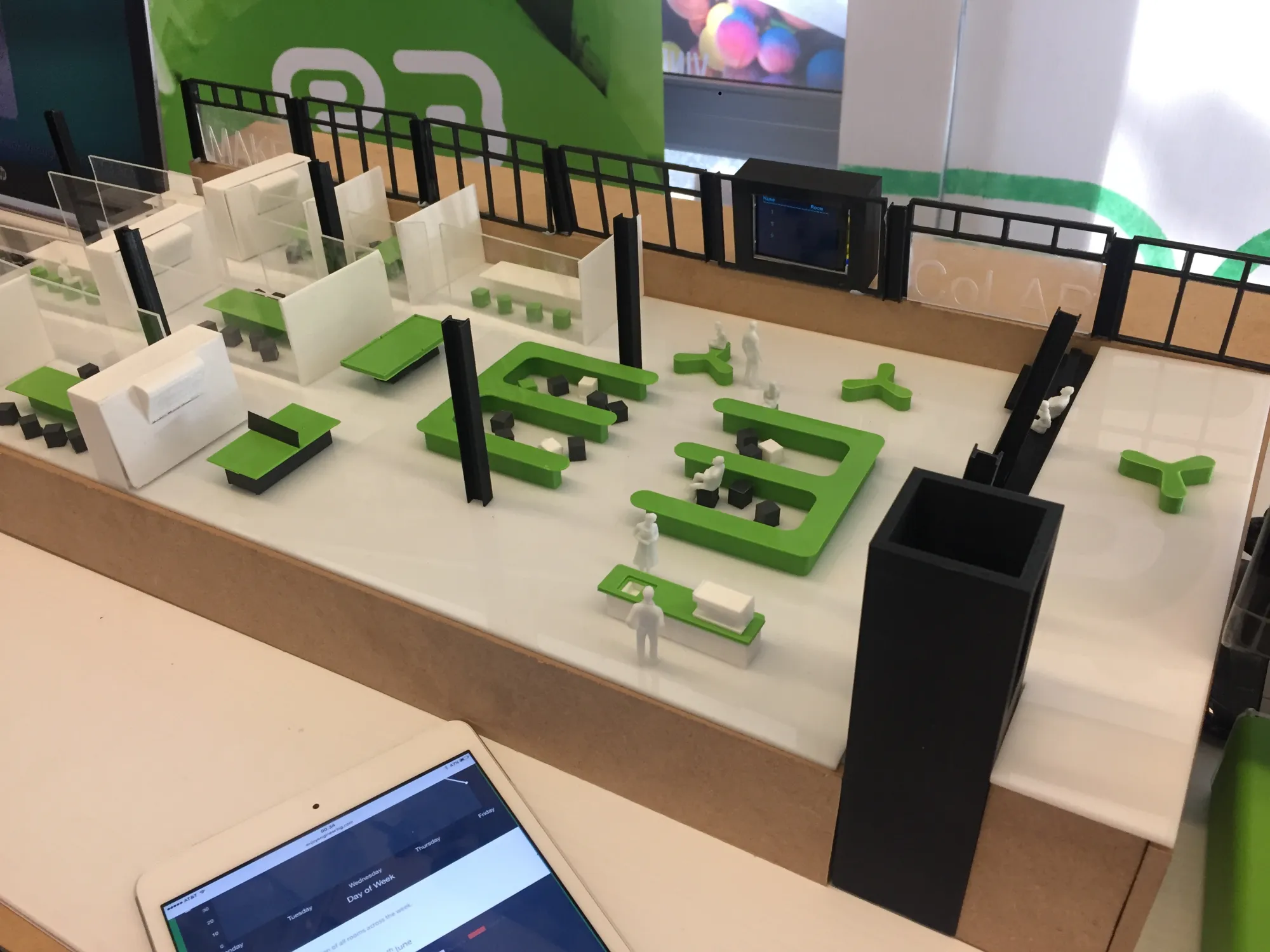
Smart rooms will give students an exciting new way to work together and to share their work. These rooms will be managed by student ambassadors, giving the students control and ownership over the spaces.
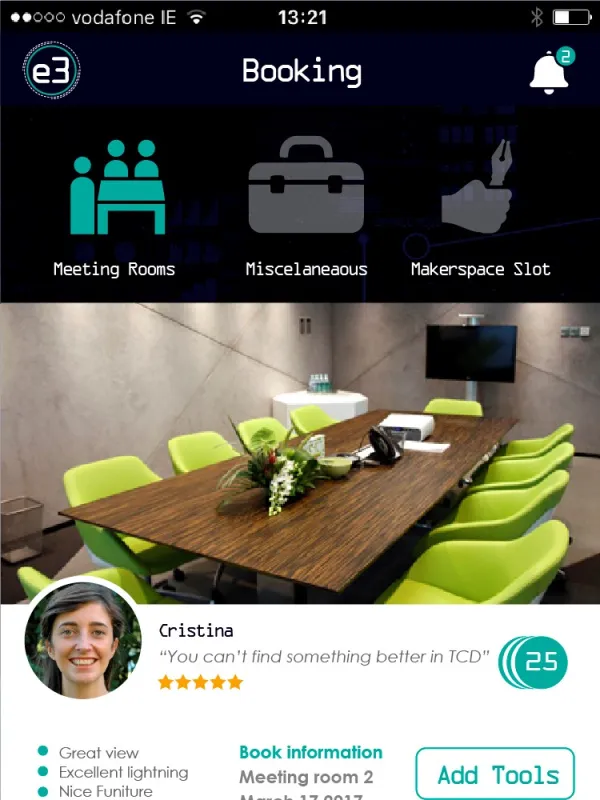
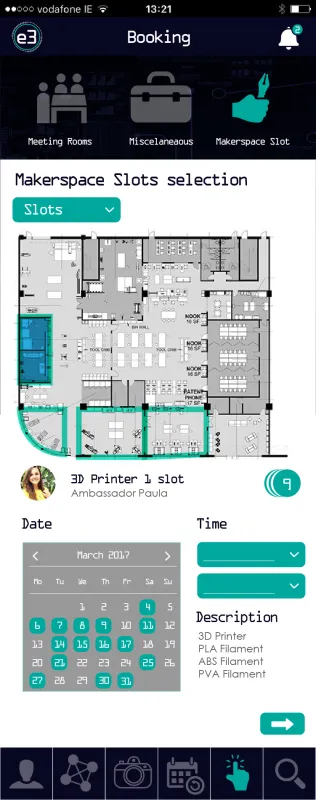
An E3 app was developed to allow students to book slots in the smart study rooms, maker spaces or trials with new equipment. The app includes a platform where students can share their skills and knowledge with the student community.
Impact
Developing a student led peer to peer
collaboration culture will support Trinity’s educational plans for more project-based learning and at the same time, develop a single student community across the 3 schools of E3 (Engineering, Computer Science, Natural Sciences).
E3 graduates will be used to a collaborative working environment, with direct similarities
to industry. With a new culture of collaboration Trinity’s future technology graduates can be ready to hit the ground running.
The data collected from the collaborative spaces has the potential to improve how students learn. This data will be a powerful tool to the university.
From the field to the prototype.
Who built it.

Cillian Heeney
Mechanical and Manufacturing Engineering

David Heaphy
Engineering with Management

Katie Petherbridge
Engineering with Management

Tara Flanagan
Mechanical and Manufacturing Engineering

Giann Karlo Aguirre
Computer Science & Engineering / Biology

Paula Mejía Botero
Visual Communication Design

Juan Pablo Rengifo
Electrical Engineering

Harold Torres
Civil Engineering / Business