ModuleM
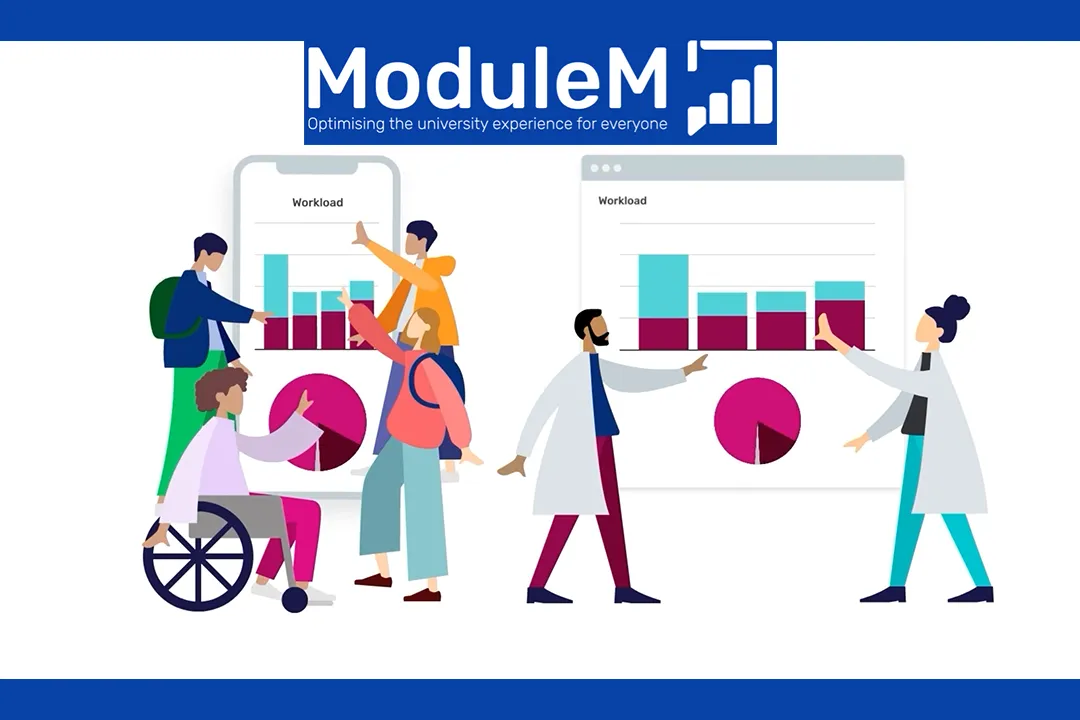
Lecturers see each module's real student workload on one visual map
Optimising the university experience for everyone.
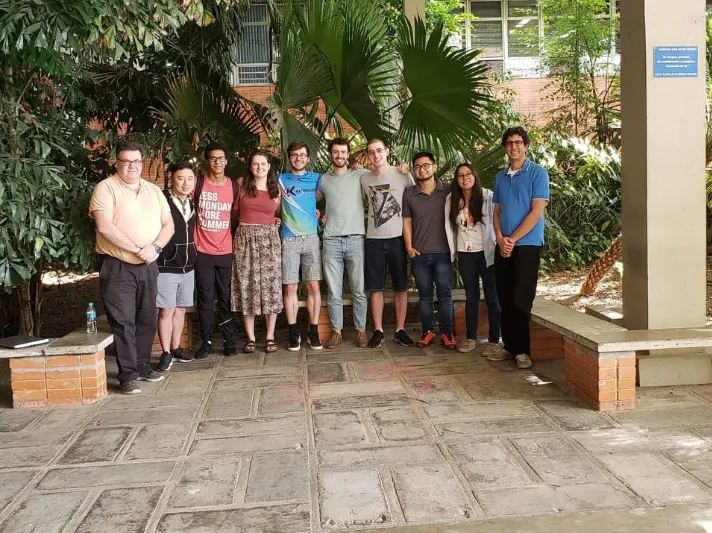
- Team
- 8 master students
- Universities
- Trinity College DublinUniversity of São Paulo
- Disciplines
- Electrical Engineering · Electronic Engineering · Mechanical Engineering · Mechatronics · Molecular Science · Product and Graphic Design
What happened, step by step.
Challenge
Trinity Teaching and Learning wanted a better university experience for students and staff. Poor, late communication between them hurts planning and causes overload, while busy staff are wary of new tools.
What the team learned
Students want to know their expected workload in advance and what assignments really demand. Lecturers want quick feedback on classes and a sense of what is reasonable to expect from students.
What they built
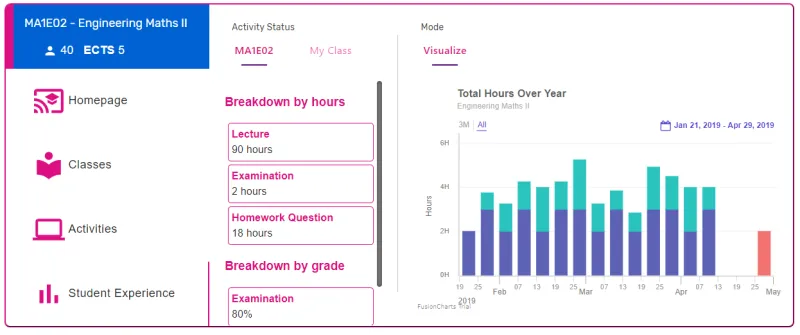
ModuleM is an online tool that collects expected completion times, workload and feedback from students and lecturers. Module Mapper, Planner, Progress Tracker, Timetable, Target Time and Feedback turn this into a course overview that shows imbalances and over-assessment.
Impact
The team expects less admin for lecturers and coordinators, clearer workload expectations that ease student anxiety, and fewer complaints from class representatives.
Full project text
The team’s original texts from the project page.
ModuleM is a single, unified tool for students, lecturers, and program coordinators with the core function of planning and visualizing workload– reducing over-assessment, workload, and improving the university experience for both academics and students.
Challenge
Students entering university now have grown up with unprecedented access to information. While the university environment has changed, the pace of change has been dramatically slower than what they have experienced in society.
Looking at the staff, there is a broader mix of experience and perspective - some will be ‘early adopters’ of all modern technology and some will be 'late adopters’.
Staff, who are already burdened with high staff-student ratios and increased administrative loads will have concerns about any further changes to how they operate or the introduction of new tools, processes, and procedures.
Solution
ModuleM is an online platform that gathers data from students and lecturers such as expected completion time of module activities, overall workload, and student feedback of module content. This data can then be used to create a visual representation of a course's overview to quickly identify student workload imbalances and to help academics identify areas of possible improvement in their modules by having a holistic view of the student experience. This transparency will facilitate a true partnership between students and academics.
Impact
This platform has the potential of reducing the number of time lecturers and course coordinators spend on admin tasks while providing more transparent workload expectations to help reduce student anxiety. Courses' workload distributions can now be visualized, which academics can use to remedy any workload imbalances, which will help students produce higher quality work, create a healthier, more manageable schedule, and reduce the number of class representatives' complaints. The platform will visually identify over-assessment areas that can reduce both student and staff workloads whilst achieving the same learning outcomes.
From the field to the prototype.
Who built it.

Eve Gleeson
Mechanical Engineering

Cian Wallnutt
Electronic Engineering

Eoghan Killalea
Mechanical Engineering

Harry Lo
Mechanical Engineering

Amanda Freitas
Product and Graphic Design

Marcus Vinicius Roso
Mechatronics

Liang Shen
Molecular Science

Caio Hudson
Electrical Engineering