SuaFazenda
Hydroponic mini-farms in apartment buildings grow greens residents order by app
Reconnecting Planting to Eating
- Key fact
- 11.5 %of global emissions from food packaging and waste
- Team
- 7 master students
- Universities
- University of São PauloTrinity College Dublin
- Disciplines
- Engineering · Management · Environmental Engineering · Mechanical Engineering · Naval Engineering
What happened, step by step.
Challenge
Fazenda Cubo asked how to connect planting to eating. Transporting produce has a high carbon cost, much of it goes uneaten, and city life separates people from where food grows.
What they built
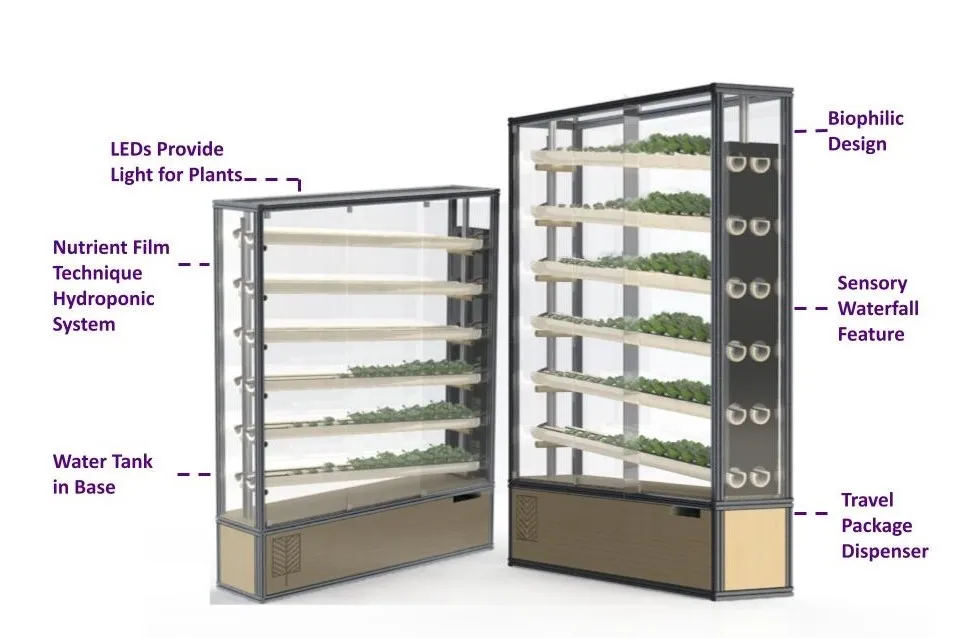
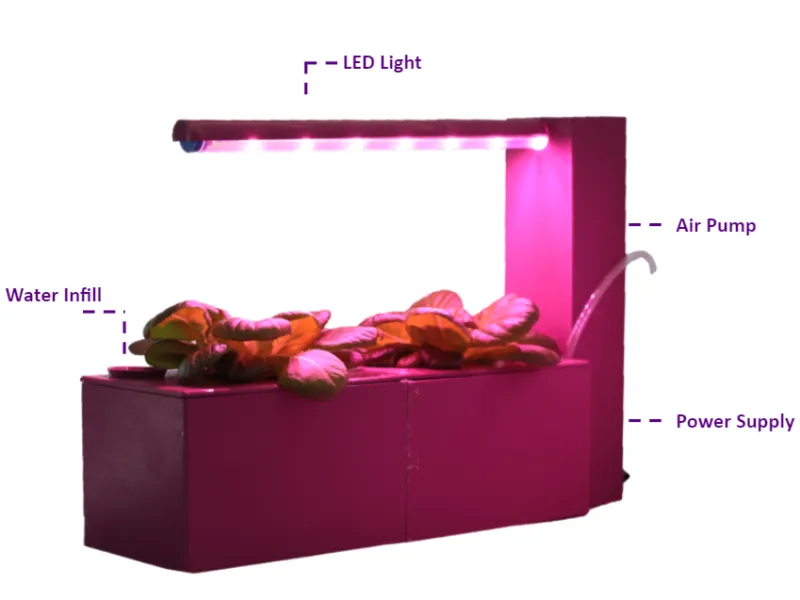
SuaFazenda is a data-driven network of climate-controlled hydroponic mini-farms in condominium buildings. Residents buy freshly harvested greens in an app and collect them from a compartment by tapping their phone. Modular home units let keen users grow themselves.
Impact
Fazenda Cubo would focus on germination and data, gain loyal customers and need smaller premises, while unit data optimises growing, logistics and supply.
Full project text
The team’s original texts from the project page.
A holistic ecosystem for urban farming, enabling consumers to get involved in the growing process and to have fresh leafy greens grown at their doorstep.
Challenge
“How might we connect planting to eating? The carbon impact of transporting food - in particular produce (a large percentage of which ends up uneaten), is being increasingly recognized as problematic.
Global trends in urbanisation have led to a spatial and intellectual disconnect between where food is grown and where it is consumed. Further, the nature of modern urban living and working creates significant pressures on individuals in terms of implicit and explicit choices they make around food purchasing, storage and consumption.
Solution
SuaFazenda creates a distributed, data-driven infrastructure for 21st century agriculture and healthy eating. The role of Fazendo Cubo evolves from their current role to focussing on the germination and earlier growth stages, and management and processing of the data from the individual solution elements. These three elements are:
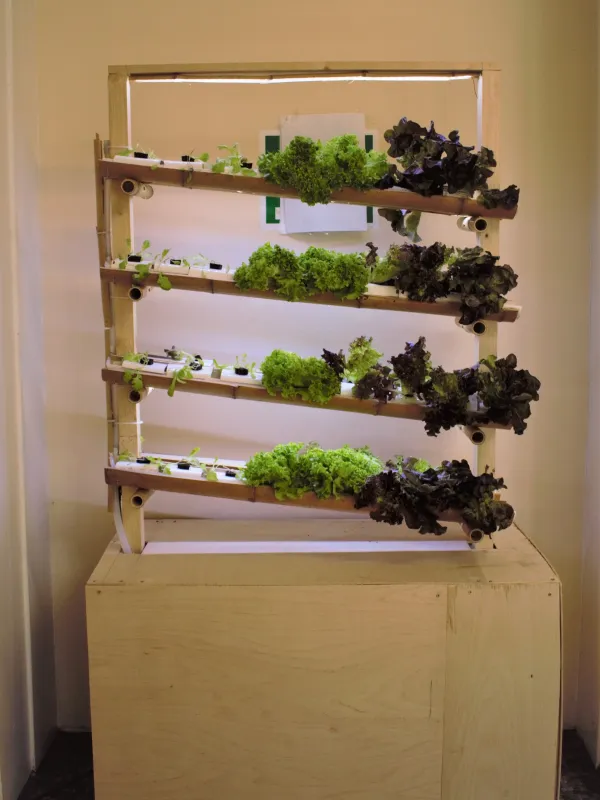
- hydroponic growth and collection units based in condominium buildings allowing freshly grown produce to be ordered and collected to individual user’s home buildings.
- an app that allows people to order fresh produce to be transferred to collection units but Fazendo Cubo staff
- individual growth units for users who wish to take even further ownership of their produce growth, where the final stages of growing can take place in their own homes.
Impact
Individual consumers get to order the freshest possible produce at the point at which they need it, and delivered (and in most case grown!) in their own apartment buildings. Motivated individuals can take this further and grow their own produce in easy to manage controlled ways, assisted by the physical units and data-driven approach managed by Fazendo Cubo.
Fazenda Cubo builds a larger base of loyal customers while needing smaller premises for their growing. The data gathered from all the units allows for sophisticated optimisation of growing, logistics and balancing of supply and demand.
The produce being locally grown using sophisticated hydroponic methods means that overall energy and water consumption are significantly reduced, while eliminating the need for pesticides.
The net result is a sophisticated ecosystem that connects planting to eating, and reduces the carbon impact of the food supply chain.
From the field to the prototype.
Who built it.

Natalia Oshiro
Environmental Engineering

Gabriel Rodrigues
Environmental Engineering

Diôgo Lopes
Naval and Ocean Engineering

Meg Tyrell
Mechanical and Manufacturing Engineering

Mark Nugent
Mechanical and Manufacturing Engineering

Abdulqadir Abshir
Engineering with Management
Breen Elliott
Mechanical and Manufacturing Engineering