Infini
Yarn blending bioplastic with leftover cotton replaces fossil fibres in knitwear
Sustainable fast fashion
- Team
- 6 master students
- Disciplines
- Business Administration · Design · Industrial Design · Interior Architecture
What happened, step by step.
Challenge
Triwool asked for a fully circular, sustainable knit garment with competitive production costs, to reduce the waste and footprint of fast fashion.
What they built
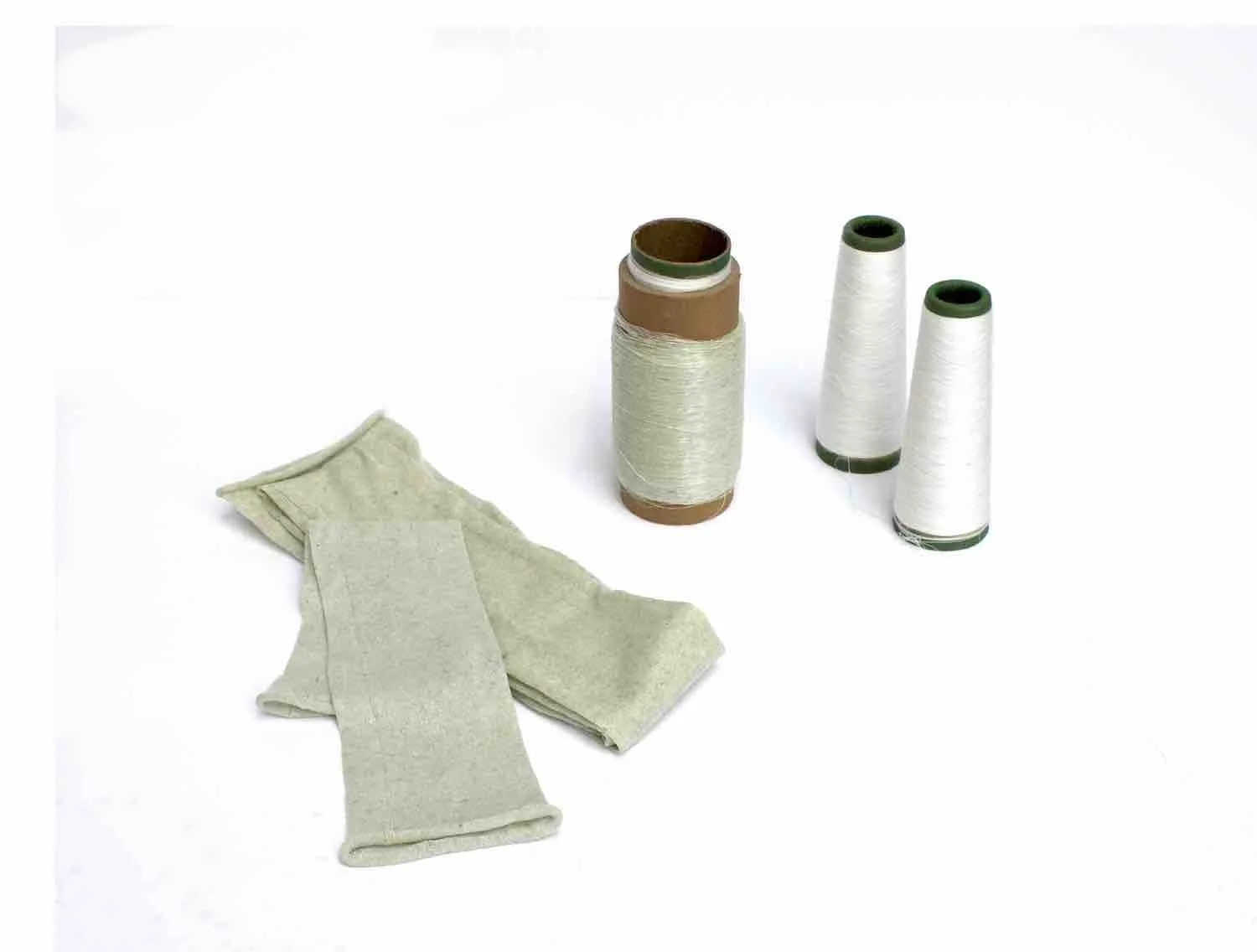
Infini is a new yarn that combines recycled cotton leftovers with two bio-based polymers. The bioplastic is recyclable and compostable and emits less CO2 than fossil fibres, so Triwool can knit sustainable garments such as T-shirts at competitive cost.
Impact
The team saw Triwool able to produce fast fashion branded as sustainable while keeping quality and production costs.
Full project text
The team’s original texts from the project page.
A new competitive cost yarn created of bioplastic and leftover cotton targeted towards more sustainable fashion industry.
Challenge
Design a fully circular and sustainable knit garment product with competitive production costs.
Solution
Infini comes as a response to the growing ecological problematic created by the fast fashion industry. The major challenge we chose to face was to introduce a new material able to replace fossil materials in the fashion industry as they leave a heavy footprint on earth. Bioplastic is recyclable, compostable, uses less resources to be produced and creates much less CO2 when compared to fossil materials. By combining cotton leftovers and bioplastic a new approach towards a more sustainable industry is paved while staying cost effective.
Impact
While the fast fashion industry is growing so are the environmental issues but also the awareness of the users. We want cheap, fashionable, long-lasting, and ecological clothes. Triwool is now equipped with the potential to deliver exactly this. They can now produce a new kind of fast fashion and brand it as ecological and sustainable for our environment while maintaining quality and production costs.
Watch the team’s pitch.
Opens in a new tab – no third-party player is embedded on this page.
From the field to the prototype.

Who built it.

Anselm Büchler
Interior Architecture & Design

Marina Okawa
Design

Kaho Bando
Industrial Design

Inês Oliveira
Design

José Luis

Savana Pires
Business administration