IRIS
A clip-on camera and sensor kit lets planners diagnose machine errors remotely
Remote error diagnosis platform for a more connected working model.
- Key fact
- 50 %ProjectedLess time spent troubleshooting machines
- Team
- 7 master students
- Universities
- University of St. GallenHasso Plattner Institute
- Disciplines
- Business Innovation · Cyber Security · Digital Health · IT Systems Engineering · Management
What happened, step by step.
Challenge
BMW Group wanted machine errors to be more visible and planning to become data-driven. Remote monitoring was largely manual, so planners often travelled to plants to inspect downtimes in person.
What the team learned
Plants work autonomously without standard processes, so one tool for all would fail. BMW already owned strong software, unused for lack of reliable data, while a line stoppage costs around 17,000 euros per minute.
What they built
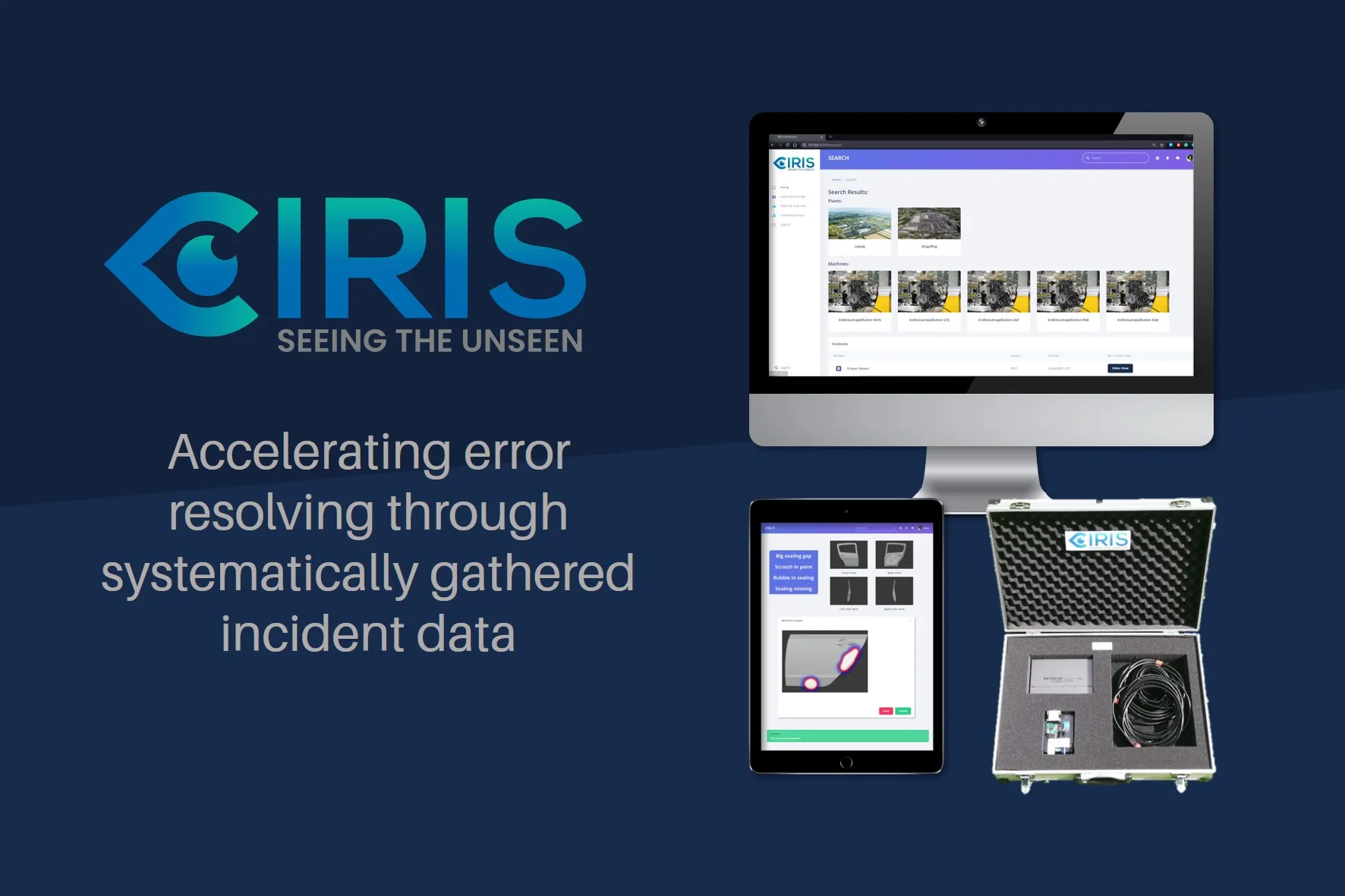
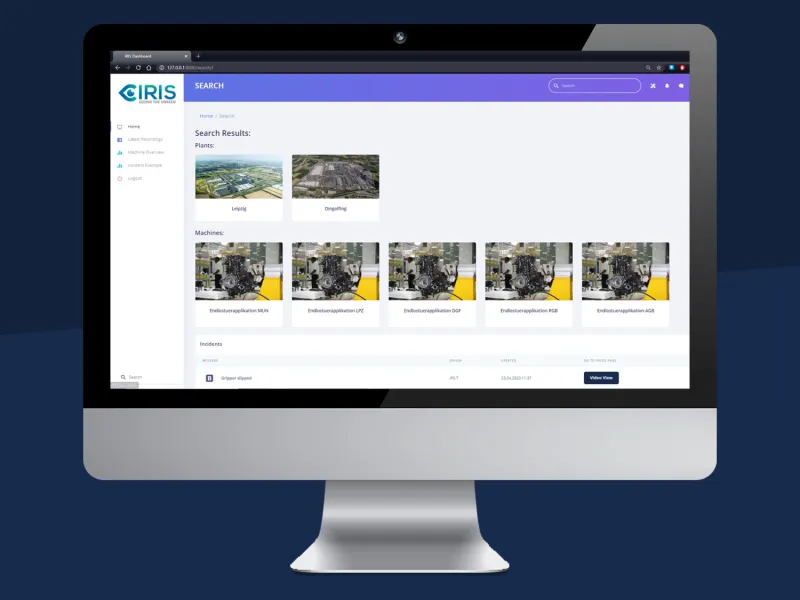
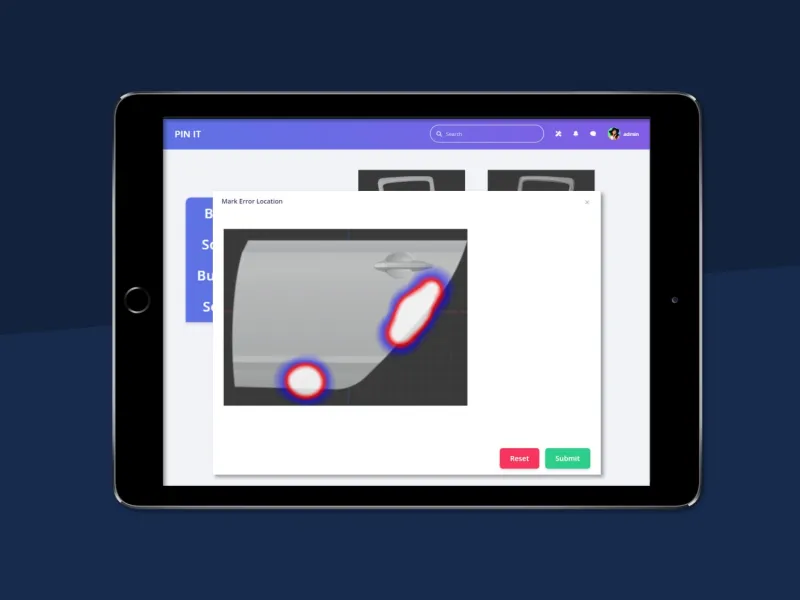
IRIS is a portable kit of cameras and environmental sensors that fits on a machine within minutes. The PinIt tablet app marks defects on a 3D model, and a cloud dashboard sequences incidents. Machine learning flags anomalies and blurs people.
How it evolved
- Step 1Tested pointers, visualisation battles and boards: users preferred graphs over tables and zoomable detail levels.
- Step 2BMW chose one movable kit that staff can attach within a 15-minute break.
- Step 3A do-or-die workshop with BMW picked IRIS after 34 prototypes; the final one was tested in Dingolfing.
Results
- On site in Dingolfing, cabling and network setup proved harder than expected.
- Testers asked for a live camera stream, flexible brackets, varied cable lengths and a heartbeat monitor.
- Projectedabout 50 % less time on error analysis, an ROI above 100 % and break-even within a year.
Impact
For BMW, IRIS promises lower travel costs and an up-to-date view of machine performance across plants. The team proposed a rollout led by a task force; adoption is not documented.
In their words
The flexibility of IRIS is the biggest strength of the system!
Full project text
The team’s original texts from the project page.
IRIS is a remote error diagnosis platform that gives you real-time insights into industrial production errors, allowing you to identify and resolve incidents quickly and precisely.
Challenge
In the context of Industry 4.0 and a more connected working model with IoT, BMW Group challenged the student team from the Hasso Plattner Institute and the University of St.Gallen with the following problem: enhance BMW Group to make machine errors more visible and bring planning processes to a data-driven working model. Particularly within remote machine monitoring, the planning and error-solving processes remain largely manual and lead to inefficiencies and high costs. In order to grasp the underlying errors of machine downtimes, a physical inspection is often necessary which requires the machine staff to frequently travel to the plants.
Solution
IRIS is a flexible solution that bridges the gap between error-occurrence and error-analysis. A modular monitoring kit, consisting of cameras and environmental sensors, can be installed on a production machine within minutes, temporarily or permanently. In combination with a web-based application on a tablet, the error locations can be quickly identified. Error incidents are automatically sequenced and visualized in an intuitive dashboard, displaying all important metrics on a specific occurrence for evidence-based decision making. The Dashboard is accessible through the cloud.
Impact
IRIS enables the planners and machine operators to have an always accessible and up-to-date picture of the machine performance across the global BMW network. This can save BMW approximately 50% of the time needed for troubleshooting their machines. The use of IRIS in more distant plants results in a significant reduction of travel costs for planning competencies, as they have the tools for remote error analysis.
For BMW Group the implementation is very attractive with an ROI above 100% and a break-even in less than a year.
Watch the team’s pitch.
Opens in a new tab – no third-party player is embedded on this page.
From the field to the prototype.
Who built it.

Moritz Blattner
Business Innovation

Livia Keller
Management

Pia Spori
Business Innovation

Christian Reich
Business Innovation

Marvin Thiele
IT Systems Engineering

Jonas Bücker
Cyber Security

Eugenia Alleva
Digital Health