STEP
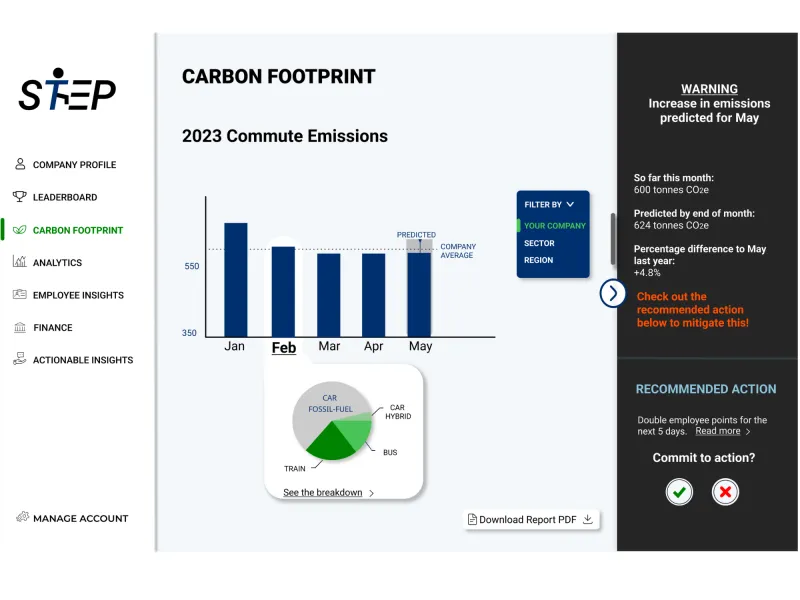
Employees earn coins for green commutes while employers see their scope 3 emissions
Motivate, Measure, Change.
- Key fact
- 64,504 tCO2 from German commuters every day
- Team
- 6 master students
- Universities
- Trinity College DublinUniversity of São Paulo
- Disciplines
- Architecture · Mechanical Engineering · Biomechanical Engineering · Chemical Engineering · Energy Engineering · Management
What happened, step by step.
Challenge
SUMMIT asked how companies can quantify and reduce scope 3 emissions from employee commuting. Recording them is hard, and individuals feel powerless to make a lasting change.
What they built
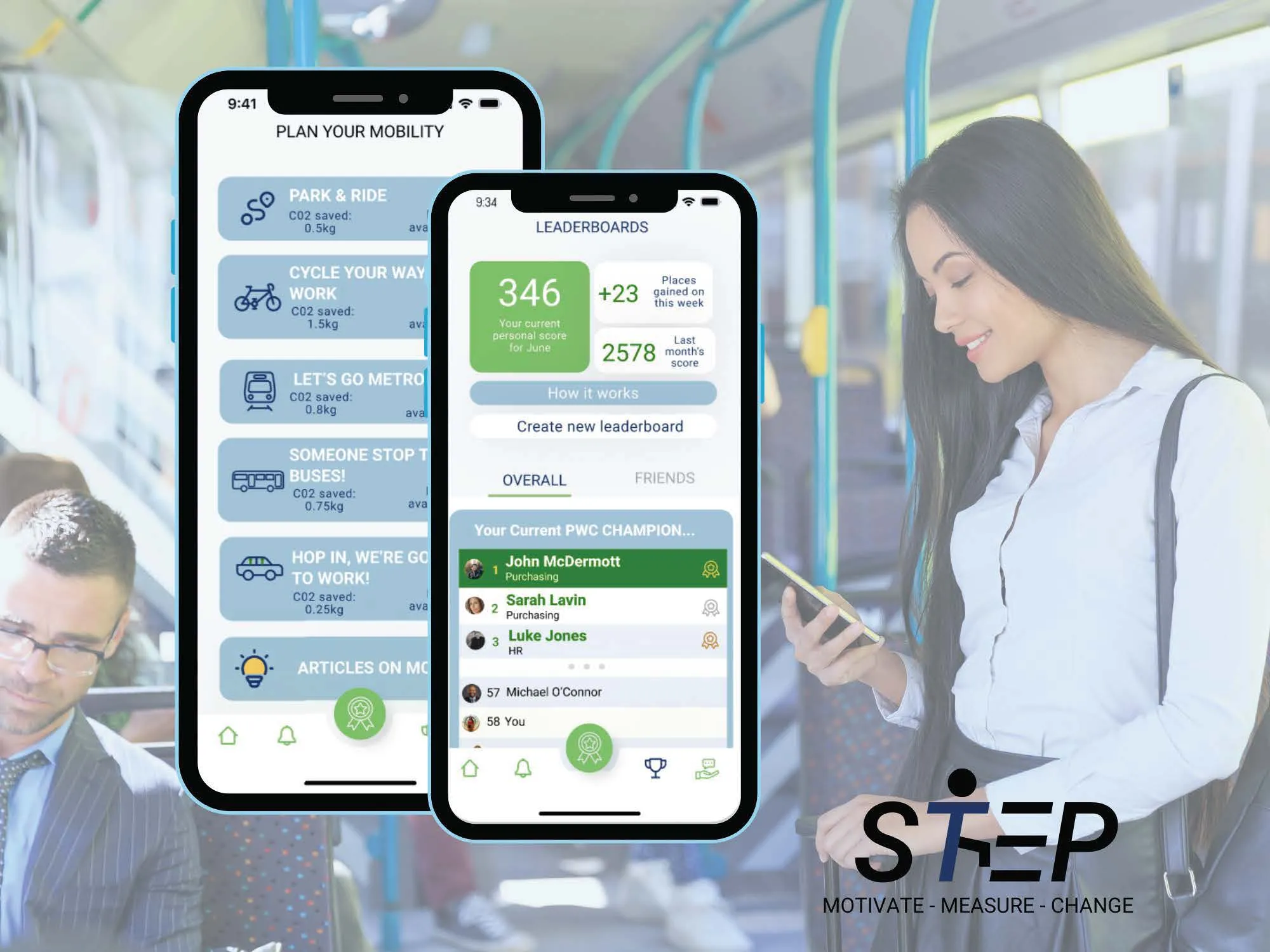
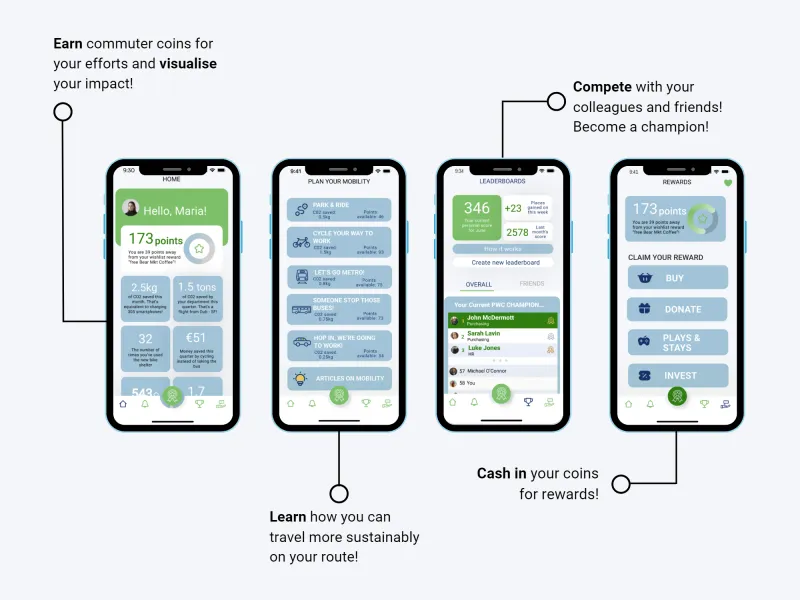
STEP is an app that gamifies sustainable commuting. Employees earn Commuter Coins for greener choices and redeem them in a marketplace for employer benefits such as subsidised food or days off. Employers see the input as insights on a dashboard.
Impact
Employers can quantify and reduce scope 3 emissions from commuting. SUMMIT gains insights into congestion and into what motivates lasting behaviour change.
Full project text
The team’s original texts from the project page.
The Sustainable Travel and Emissions Programme, or STEP, provides companies with a platform to measure and manage their scope 3 emissions by facilitating, motivating and rewarding employees for choosing more sustainable commutes.
Challenge
The challenge is to address pollution, traffic congestion, and climate change.
Companies are now being held to stricter laws and mandates with regard to lowering emissions, in particular scope 3 emissions. However, recording and managing these is extremely difficult. Individuals also often feel powerless and struggle to see how their actions can make a difference and thus often require motivation to make a sustained change.
Creating equitable incentives and navigating the complexities of politics and responsibility add another layer to the challenge.
Solving this problem is vital for our planet's survival.
Solution
The STEP platform is a cloud based service that allows employees to opt in to a reward and verification system that helps them to optimise their commuting behaviour for sustainability, while accounting for their personal circumstances. Points earned can be exchanged in the STEP marketplace for benefits provided by their employer, e.g., subsidised food, drinks and even days off!
The employers benefit from the comprehensive analytics provided by STEP. This includes quantification of their scope 3 emissions and actionable insights to enable their employees to make sustained contributions to this mission and live happier, healthier lifestyles.
Impact
Our solution brings significant value to all of those involved.
Employees experience various benefits, such as reducing their personal carbon footprint, contributing to a broader environmental effort, and feeling a sense of impact. They may also potentially enjoy improved well-being, happiness, peer relations, and productivity.
For employers, our solution quantifies and reduces scope 3 emissions, leading to enhanced reputation, visibility, and environmental responsibility. Globally, better measurement and management of scope 3 contributes to a more sustainable future.
The user-centred-design approach taken provides the project sponsor with unique insights into solving congestion and the motivations which drive sustained positive behaviour change.
Watch the team’s pitch.
Opens in a new tab – no third-party player is embedded on this page.
From the field to the prototype.
Who built it.

Amy Heatley
Mechanical and Manufacturing Engineering

Aoife McLoughlin
Bio/Mechanical Engineering with Management

Daniel Forrester
Mechanical & Energy Engineering with Management

Louise McKiernan
Bio/Mechanical Engineering with Management

João Marcos Duque Silva
Chemical engineering

Mariana Sato
Architecture and Urbanism