BioNet
Farms turn agricultural waste into biogas that a shared network delivers to Intel
Powering Industry, Empowering Farmers
- Team
- 7 master students
- Disciplines
- Business Informatics · Computer Science · Industrial Engineering · Mechanical Engineering
What happened, step by step.
Challenge
Intel Ireland burns large amounts of natural gas and wants to cut its fossil-fuel dependency amid rising prices. Biogas could help, but Ireland lacks the renewable infrastructure and biowaste to cover Intel's full demand.
What they built
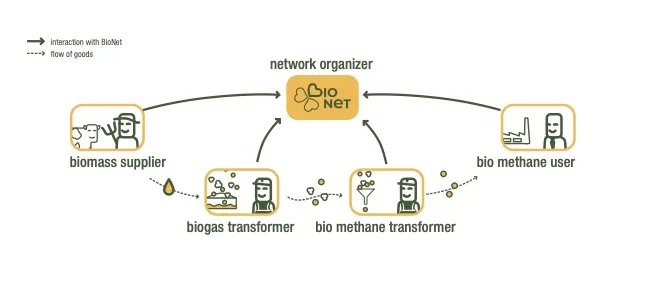
A start-up concept for a decentralised biogas network. Participating farms receive anaerobic digesters; BioNet collects the biogas, transports it to the Intel campus and upgrades it to biomethane on site. It also handles logistics, regulatory compliance and technical support for farmers.
Impact
Farmers would gain a new revenue stream with technical and regulatory help. Intel would rely less on fossil fuels, lower its carbon emissions and move towards its sustainability goals.
Full project text
The team’s original texts from the project page.
BioNet is a decentralized biogas network that connects farmers and industry by turning farm waste into clean biomethane for industrial use.
Challenge
How might we create a sustainable transition to biogas usage at the Intel campus that is cost-efficient and of maximum benefit to both Intel and the surrounding community Intel Ireland requires significant amounts of natural gas annually to power its operations. However, due to rising energy prices, geopolitical tensions, and the urgent need to become more sustainable, Intel is seeking alternatives to reduce its dependency on fossil fuels. Biogas presents a promising renewable solution, but Ireland currently lacks sufficient renewable energy infrastructure and biowaste to meet Intel’s full energy demand. This challenge is highly relevant as it explores how to enable a cost-efficient, scalable transition to biogas that benefits both Intel and the local community, without compromising supply reliability or sustainability goals.
Solution
BioNet is a startup that connects farmers with industrial partners to create a decentralized biogas network. Each participating farm receives an anaerobic digester to produce biogas from agricultural waste. BioNet collects the biogas, transports it to the Intel campus, and upgrades it to biomethane on-site. The resulting biomethane is then used directly in Intel’s manufacturing processes. BioNet manages the coordination between all stakeholders, ensuring efficient logistics, regulatory compliance, and technical support for farmers. This model empowers local agriculture, reduces fossil fuel dependence, and creates a scalable, sustainable energy supply tailored to industrial needs.
Impact
The value of BioNet lies in its ability to provide a reliable, sustainable energy source while fostering local economic and environmental benefits. For the farmers, it creates a new revenue stream and offers technical and regulatory assistance. For Intel, it reduces reliance on fossil fuels, lowers carbon emissions, and contributes to corporate sustainability goals.
From the field to the prototype.
Who built it.

Alena Gerasimova
Mechanical Engineering

Úna McNamara
Mechanical Engineering

Seán Walsh
Mechanical Engineering

Jonathan Döffert
Industrial Engineering and Management

Maximilian Graf
Business Informatics

Georg Gntuni
Computer Science
Astrid Bonse
Industrial Engineering and Management