Fuel
Eye blinking and heart rate are used to predict fatigue before it strikes
Wake up to a new day. It’s time for Fuel.
- Team
- 7 master students
- Disciplines
- Computer Engineering · Design and Engineering · International Management · Management Engineering · Physics · Product-Service System Design
What happened, step by step.
Challenge
Chronic fatigue is the most common symptom for people treated for multiple sclerosis or cancer. It feels unpredictable, upsets daily life and is often played down by those around them. Sanofi Genzyme Italy set the brief.
What the team learned
The team framed it simply: a healthy person starts the day with ten blocks of energy, a fatigued patient with five. Because fatigue is invisible, others struggle to give the right support.
What they built
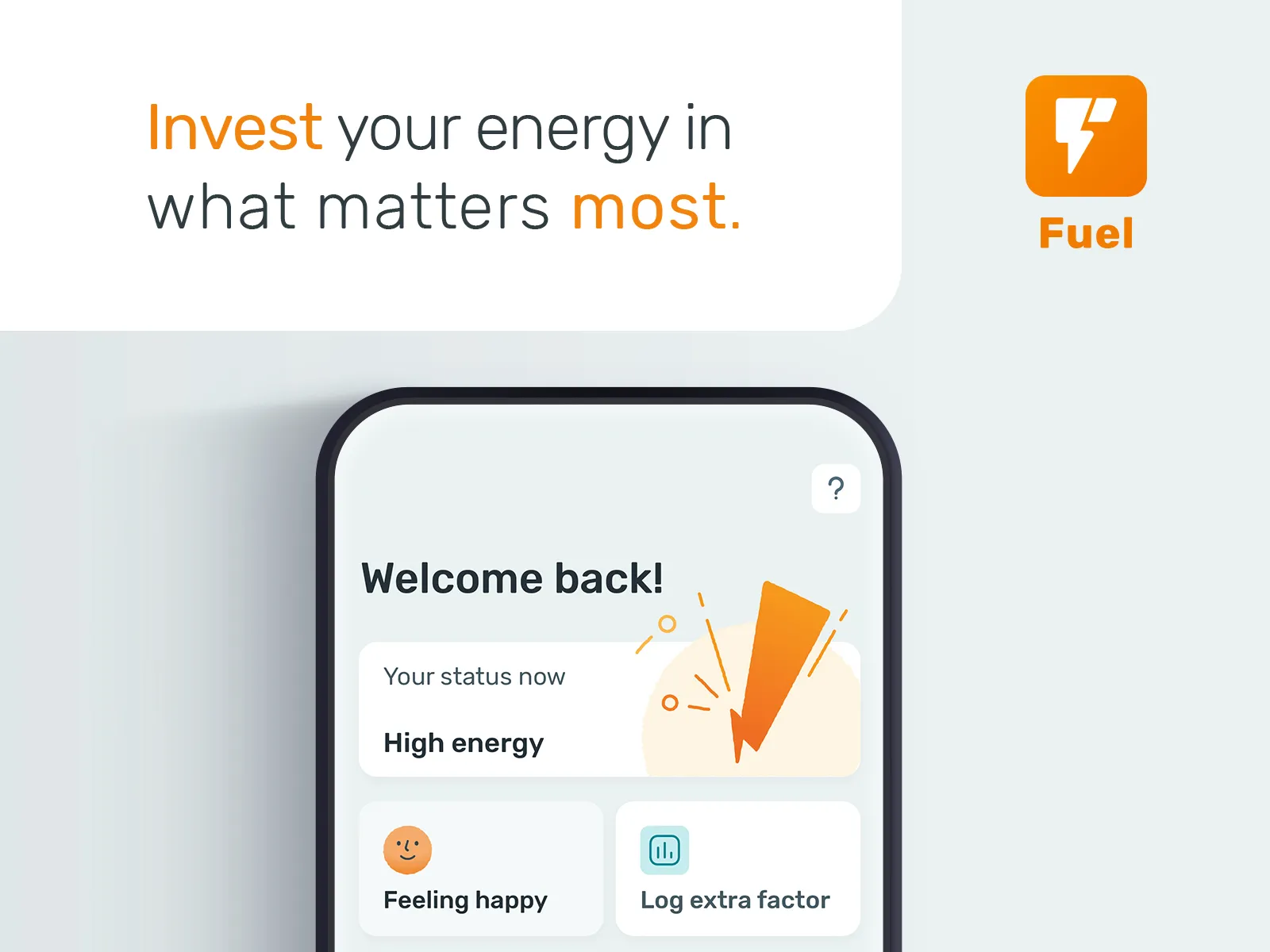
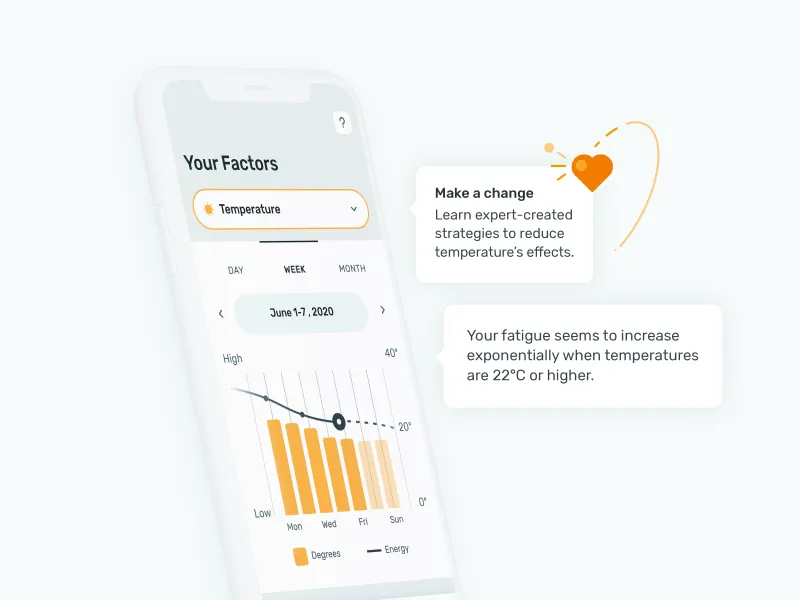
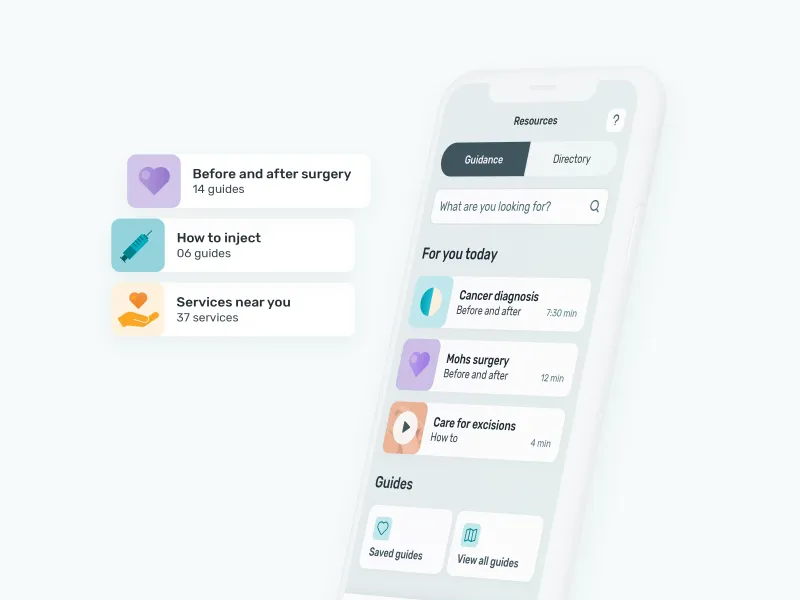
Fuel is a phone app that runs in the background and uses AI on signals such as eye blinking and heart rate to track fatigue and forecast when the user will feel less tired. It offers strategies from occupational therapists and shares reports with caregivers and medical staff.
Impact
Caregivers get tailored advice to support patients better. For Sanofi Genzyme, the team saw a route to new partnerships with patient associations and scientific societies.
Full project text
The team’s original texts from the project page.
A service system that helps patients to manage chronic fatigue, find helpful resources tailored to their daily needs, and better communicate with caregivers and medical staff.
Challenge
People who suffer from aggressive and/or chronic diseases, such as oncology and multiple sclerosis patients, face several life-changing turning points since they are diagnosed. We have found that their daily struggles with their symptoms and the effects of their treatments pose a great obstacle in maintaining their quality of life, especially when it comes to managing fatigue, a seemingly unpredictable and recurrent sense of physical and mental exhaustion that interferes with their normal functioning. This also affects greatly how they relate to others, making it difficult for the people around them to offer the right support.
Solution
Fatigue may be unpredictable, but it gives away tangible signals that can be detected and measured, such as variations in eye-blinking or heartbeats rate. Fuel recognizes these signals to understand and later predict the patient’s fatigue and to correlate it to the factors that affect it so that patients can become proactive in managing their fatigue and planning their days prioritizing what matters most. With an app system for both patients and caregiver, Fuel also helps the patient’s support system to better understand the patient’s journey and provide more adequate support, if needed.
Impact
With Fuel, AI works to the advantage of our users and sponsor. By training an algorithm to recognize emergent patterns in people’s
physiological parameters, Fuel obtains the user's fatigue trend and predicts how it will evolve over time. Patients access this information in combination with practical advice to understand how their fatigue
behaves and the factors affecting it, and to make changes to decrease these effects.
With Fuel, caregivers access tailored advice to prepare for giving better support. Finally, our sponsor might engage in a new dialogue with institutions and establish new forms of partnerships with Patient Associations and Scientific Societies.
Watch the team’s pitch.
Opens in a new tab – no third-party player is embedded on this page.
From the field to the prototype.
Who built it.

Ludovico Cavazzuti
Management Engineering

Pratyush Dadhich
Design and Engineering

Daniela de Sainz-Molestina
Product-Service System Design

Eugenia Dessì
International Management

Chiara Pacchiarotti
Product-Service System Design

Mirco Tincani
Physics

Ugo Vergallo
Computer Engineering